
The real signal this week isn’t about new tech, but about how institutions—from the Fed to your board—are either adapting or failing to reinvent themselves for a volatile future.
📊 11 episodes across 7 podcasts
⏱ 364 minutes of intelligence analyzed
🎙 Featuring: Sian Beilock, Joe Manchin, Kevin Warsh
|

The Lead
While the headlines chase AI breakthroughs, the real conversation among operators is centering on institutional innovation—or the lack thereof. This isn't about new tooling; it's about whether the foundational structures governing our economies, businesses, and even our communities are fit for purpose in complex, unpredictable environments. From the Federal Reserve's evolving mandate to how American innovation really scales, the consensus points to a critical need for structural reinvention.
David Hsu, Wharton Management Professor, cut through the noise, arguing that "America's greatest innovation may actually be more institutional innovation. That is, we repeatedly invent better ways to transform discoveries into industries." This insight, shared on This Week in Business, reorients our focus from individual inventions to the systems that commercialize them. It's not just about a new product, but the regulatory frameworks, funding mechanisms, and organizational designs that allow it to scale impactfully.
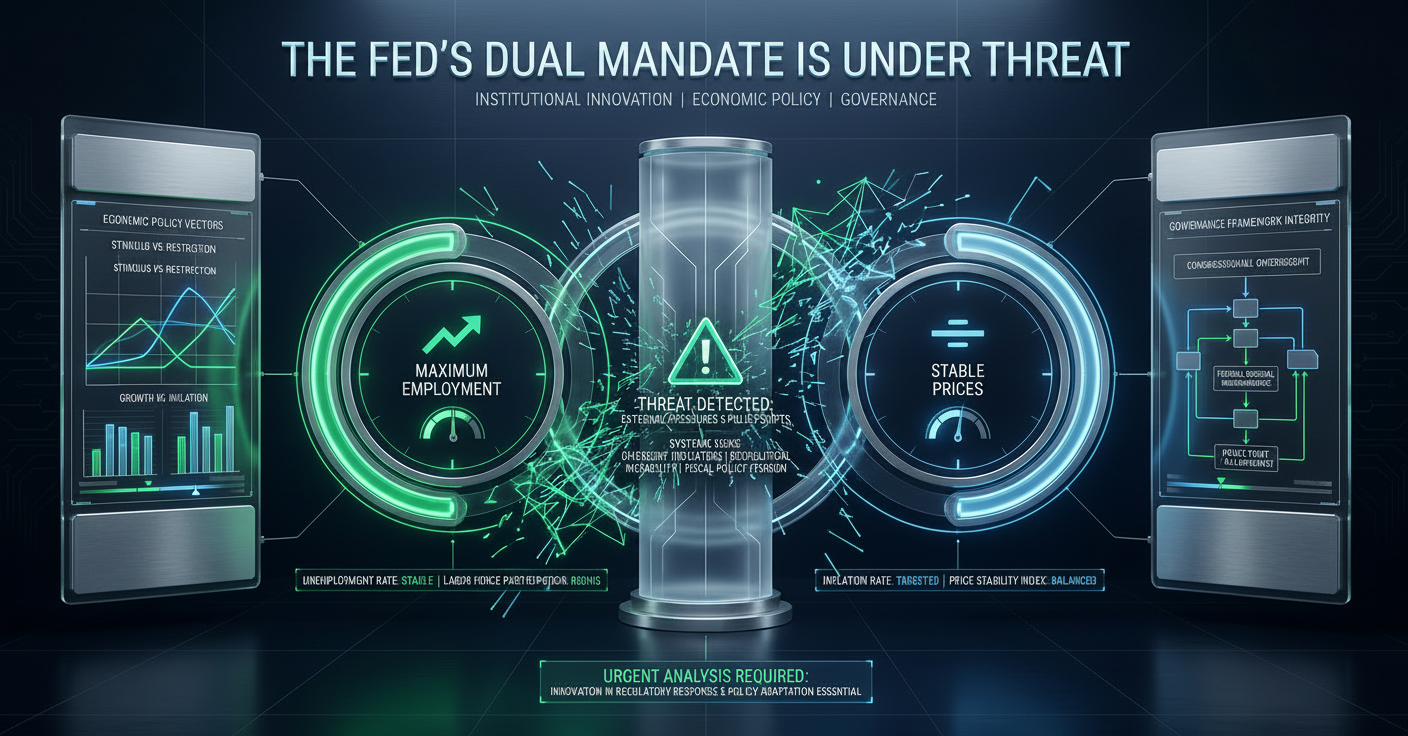
Yet, several discussions highlighted the friction. The Federal Reserve, for instance, faces questions about whether its dual mandate of price stability and maximum employment can adapt to structural inequities (The Indicator from Planet Money). And in Chicago, the Obama Presidential Center, despite its symbolic capital, has ironically run into the same challenges of top-down decision-making and community displacement that community organizers have historically fought against (The Indicator from Planet Money).
The takeaway? Technical innovation is only as effective as the institutional frameworks that support its diffusion and ensure equitable outcomes. Without reinvention at the systemic level—whether in governance, regulation, or community engagement—even the most groundbreaking technologies risk irrelevance or, worse, exacerbating existing problems.
What legacy institutions in your stack are ripe for a full-scale operational overhaul, rather than just a tech refresh?
The Rundown
① Boards are now the Frontline of Family Business Resilience.
Professional advisory boards are no longer a luxury but a crucial success factor for family-owned retail businesses, balancing family interests, ownership, and business performance amidst volatile markets. (Prof Dr Philipp Hoog on The Better Boards Podcast Series)
→ The Operator Take: For family businesses, invest in truly independent, strategic board members who can challenge internal assumptions and guide through succession; this isn't just about compliance, it's about competitive edge and continuity.
② Political Gridlock is a Funding Problem, Not Just Ideology.
The massive influx of campaign funding, particularly from billionaires, is fundamentally reshaping the political landscape and making bipartisan cooperation increasingly difficult. (Joe Manchin on How Leaders Lead with David Novak)
→ The Operational Reality: Understand that legislative stagnation isn't always about policy disagreement; it's often a symptom of financial incentives that push politicians away from common ground, impacting regulatory stability and long-term planning for businesses.
③ AI's Strategic Value Demands Institutional, Not Just Technical, Innovation.
America's long-standing leadership in innovation comes less from individual technological breakthroughs and more from its unique ability to continuously reinvent institutional frameworks for commercialization. (David Hsu on This Week in Business)
→ The Operator Take: For AI deployment, focus less on chasing the next model and more on building the internal and external institutional structures—data governance, ethical guidelines, cross-functional teams, adaptable regulatory frameworks—that enable productive diffusion and real ROI.
④ Consumer Confidence is Detached from Economic Reality, Implying Continued Spending.
Despite persistent consumer pessimism about the economy, future financial expectations remain optimistic, signaling continued positive consumer spending growth, albeit slightly moderated. (Dana M. Peterson on C-Suite Perspectives)
→ The Operator Take: Don't let headline economic pessimism dictate your near-term consumer-facing strategy; consumers might feel bad, but they're still planning to spend, especially when things like falling oil prices provide immediate relief, so stay aggressive on demand generation.
⑤ CEOs Irrational Competitive Behavior Starts on Campus.
Research suggests CEOs are more likely to view rival companies as direct competitors if their educational backgrounds included college rivalries, even if there's no direct market overlap. (Henning Piezunka on This Week in Business)
→ The Operator Take: Be aware of potential irrational biases in competitive strategy that stem from non-market factors like personal histories; ensure your competitive intelligence isn't just data-driven but also checks for human-centric irrationality at the executive level.
The Stack
🔥 HEATING UP
• Circular Economy: Driven by visionary leaders, companies are increasingly adopting circular business models to enhance resilience, reduce climate impact, and create long-term value, even if customer willingness to pay a premium remains a challenge. (Arnaud Marqui on C-Suite Perspectives)
• Bipartisan Relationship Building: Despite political polarization, some leaders, like Joe Manchin, demonstrate that informal personal interactions and shared interests can still lead to crucial legislative common ground. (Joe Manchin on How Leaders Lead with David Novak)
• Governance in Family-Owned Businesses: Recognized as a critical success factor, strong governance structures, particularly professional advisory boards, are enhancing continuity, transformation, and trust in family firms. (Prof Dr Philipp Hoog on The Better Boards Podcast Series)
🔭 ON WATCH
• Kevin Warsh's Fed Chair Agenda: The new Fed Chair's initial focus on price stability with limited mention of maximum employment signals a potential shift in the Fed's priorities, raising questions about the future of its dual mandate. (Kevin Warsh on The Indicator from Planet Money)
• USMCA Under Threat: Despite being championed as "the largest, fairest, most balanced and modern trade agreement ever achieved" by its architects just years ago, it is now on the chopping block, highlighting a shift towards trade as "power redeployment" rather than mutual benefit. (Barry Appleton on The Indicator from Planet Money)
• AI chatbot Evergreen: Dartmouth College’s deployment of an AI chatbot to support student mental health amidst growing concerns about AI itself underscores the emerging role of AI in critical support functions. (Sian Beilock on Freakonomics Radio)
🧊 COOLING OFF
• Activist Short Selling (Traditional fraud cases): While still present, outright fraud now comprises a smaller portion (20-25%) of short-seller investigations, with the majority shifting to "gray zone" conduct where companies manipulate financial statements within the letter of the law. (Carson Block on Summation (formerly World of DaaS))
• Trust in Higher Education: Public confidence in higher education continues to decline, with 7 out of 10 Americans believing universities are headed in the wrong direction, leading institutions like Dartmouth to proactively address the issue through policy changes and transparency. (Sian Beilock on Freakonomics Radio)
• Ignoring "Planetary Boundaries": Businesses that fail to educate themselves on and integrate "planetary boundaries" into their strategy risk significant future costs for climate inaction and resource scarcity. (Arnaud Marqui on C-Suite Perspectives)
The Bottom Line
In a world of accelerating change, the competitive advantage now accrues to those who can reinvent not just their products, but the institutions and frameworks that govern their operations and markets.
📖 Want the full episode breakdowns, guest details, and listen links?
Appendix
The Indicator from Planet Money: "Obama's new Presidential Center and his tricky relationship with the South Side" · 35 min · Featuring Waylon Wong
The Operator Listen: For leaders navigating large-scale development projects, this episode is a masterclass in the complexities of community engagement and the unintended consequences of even well-intentioned initiatives. ▶ Listen · Apple Podcasts
Summation (formerly World of DaaS): "Short-seller Carson Block: a fugitive CEO, Libyan spies, and $50B fraud" · 71 min · Featuring Carson Block
The Operator Listen: Operators should listen to understand the evolving landscape of financial integrity, particularly how high-trust environments can be exploited, and the increasing sophistication of financial statement manipulation in "gray zone" areas. ▶ Listen · Apple Podcasts
This Week in Business: "Why America Leads the World in Innovation" · 13 min · Featuring Dan Loney
The Operator Listen: Essential listening for anyone thinking about long-term competitive strategy, it reframes innovation as fundamentally about institutional design, not just individual breakthroughs. ▶ Listen · Apple Podcasts
How Leaders Lead with David Novak: "#298: Joe Manchin, Former Governor and Senator, West Virginia – How to find common ground" · 75 min · Featuring David Novak
The Operator Listen: This episode offers actionable insights for leaders struggling to build consensus in polarized environments, emphasizing the power of personal connection over ideological divides. ▶ Listen · Apple Podcasts
The Indicator from Planet Money: "Does the new Fed chair care about jobs?" · 9 min · Featuring Darian Woods
The Operator Listen: C-suite executives should pay close attention to this signal regarding the Fed's potential shift in priorities, as it could have significant implications for economic policy and labor market dynamics. ▶ Listen · Apple Podcasts
This Week in Business: "Navigating Competition and Collaboration in the AI Race" · 13 min · Featuring Henning Piezunka
The Operator Listen: Anyone leading a team involved in competitive analysis needs to hear this, as it exposes the often-irrational, human-centric biases that can warp strategic decision-making in high-stakes markets like AI. ▶ Listen · Apple Podcasts
The Better Boards Podcast Series: "From Family Table to Board Table - Effective Governance in Family-Owned Retail Businesses | Prof Dr Philipp Hoog, Partner, BBE Handelsberatung" · 20 min · Featuring Dr Sabine Dembkowski
The Operator Listen: Critical for leaders in family-owned enterprises, this underscores why robust, professional governance structures are non-negotiable for long-term resilience and effective succession planning, avoiding the pitfalls of concentrated decision-making. ▶ Listen · Apple Podcasts
Freakonomics Radio: "680. Can Universities Win Back Our Trust?" · 50 min · Featuring Sian Beilock
The Operator Listen: For any institutional leader, this episode offers a frank assessment of declining public trust and actionable strategies—from admissions reform to free expression—for rebuilding credibility and societal value. ▶ Listen · Apple Podcasts
C-Suite Perspectives: "The State of the Economy for June 2026" · 28 min · Featuring Dana M. Peterson
The Operator Listen: CMOs and revenue leaders should listen for the nuanced consumer sentiment analysis, indicating that despite macro pessimism, individual financial optimism might sustain spending, demanding a recalibrated market approach. ▶ Listen · Apple Podcasts
C-Suite Perspectives: "How Circular Innovation Creates a Competitive Edge" · 40 min · Featuring Barbara Mendes-Jorge
The Operator Listen: Operations and sustainability VPs will gain concrete strategies on how a circular economy approach can generate long-term competitive advantages and robust supply chains, beyond mere compliance. ▶ Listen · Apple Podcasts
The Indicator from Planet Money: "Why Trump wants to rip up his own trade deal" · 10 min · Featuring Adrian Ma
The Operator Listen: This is a must-listen for executives with international supply chains, revealing the increasingly adversarial nature of trade negotiations and the inherent risks of treating global trade as a zero-sum game. ▶ Listen · Apple Podcasts
