
The strategic value of embracing discomfort—from personal mastery to geopolitical maneuvering—as the only path to meaningful growth and competitive advantage.
📊 11 episodes across 9 podcasts
⏱ 492 minutes of intelligence analyzed
🎙 Featuring: Dr. Becky Kennedy, Jill Schulman, Molly Graham, David Epstein, Jim Himes, Daniel Coyle, Tonya Leigh
|

THE BIG SHIFT
The leaders this week converged on a counter-intuitive principle: sustained growth, whether personal, organizational, or strategic, frequently demands a deliberate move toward discomfort rather than away from it. This challenges conventional wisdom that often prioritizes comfort and efficiency above all else. True discipline, for instance, isn't about rigidity but agility, which requires constantly pushing boundaries and embracing uncomfortable changes (Brené Brown, Adam Grant on Dare to Lead with Brené Brown).
This willingness to lean into unease extends to creativity, where David Epstein (on Coaching for Leaders) argues that stringent constraints, rather than complete freedom, are often the crucible for genuine innovation. Echoing this, Jill Schulman (on The Leadership Podcast) defines bravery not as the absence of fear, but as "voluntary action in the presence of fear toward a noble, worthwhile goal." She posits that consistent acts of bravery literally reshape the brain, strengthening neural pathways that support resilience and growth.
"If you push your people to move toward what they fear, which will make them uncomfortable, they will not only be more successful and perform better at work... but I want them to have higher levels of life satisfaction and happiness and self love."
— Jill Schulman, Keynote Speaker, Marine Corps Veteran, Bravery Expert and Author of "The Bravery Effect" on The Leadership Podcast
In a world optimized for ease, the competitive edge will increasingly belong to those who cultivate the capacity to intentionally seek out and metabolize discomfort. This isn't merely about grit; it's a strategic imperative for individuals and organizations alike to escape plateaus and unlock new performance ceilings. The unwillingness to confront "the worst thing that can ever happen, which is a feeling" (Tonya Leigh on CEO School with Suneera Madhani) or to embrace the "beautiful messes" that precede innovation (Daniel Coyle on Coaching for Leaders) becomes a critical limiter. This perspective suggests that long-term resilience and breakthrough innovation are built not by avoiding struggle, but by actively engaging with it and transforming it into a source of strength.
Your Board Question:
Are our strategic plans, cultural norms, and leadership development programs actively cultivating discomfort as a catalyst for growth, or are we inadvertently optimizing for a comfort that leads to stagnation?
IDEAS IN BRIEF
① The Workplace as a Stage for Unfinished Childhood Business.
The workplace often becomes a space where individuals unconsciously play out unresolved dynamics from their early lives, influencing communication, relationships, and leadership styles. (Kim Scott on Radical Candor: Communication at Work)
→ The Opportunity: Recognizing this provides a powerful lens for leaders to understand team dynamics, foster psychological safety, and address communication breakdowns by looking beyond surface-level interactions.
② Creativity Thrives Under Intelligent Constraints.
The popular belief that complete freedom fosters creativity is often a myth; rather, well-defined constraints can force more innovative thinking by preventing the "path of least resistance" and encouraging novel solutions. (David Epstein on Coaching for Leaders)
→ The Strategic Implication: Leaders should intentionally design strategic constraints and clear parameters for projects to drive genuine creativity and prevent teams from defaulting to comfortable, but unoriginal, solutions.
③ Effective Communication Needs a "Strategic Enemy" (Category, Not Competitor).
To differentiate effectively in a crowded market, it's more impactful to define what you're fundamentally against as a category, rather than just what you are better than a direct competitor. (Oliver Aust on SPEAK LIKE A CEO)
→ The Differentiator: This framework helps shape messaging that resonates more deeply by providing a clear contrast, making your unique value proposition instantly understandable and memorable to your audience.
④ Delegation: Not Just What, But How, And Its Nuances for Gender.
Effective delegation involves clearly communicating not just the "what" but also essential "how" elements; additionally, women often demonstrate reluctance to delegate, associating it with negative emotions, which can be overcome by reframing it as a growth opportunity for subordinates. (Molly Graham on Worklife with Adam Grant)
→ The Leadership Imperative: Leaders must become explicit about the scope and method of delegated tasks, while actively coaching and empowering female colleagues to embrace delegation as a tool for both personal and team advancement.
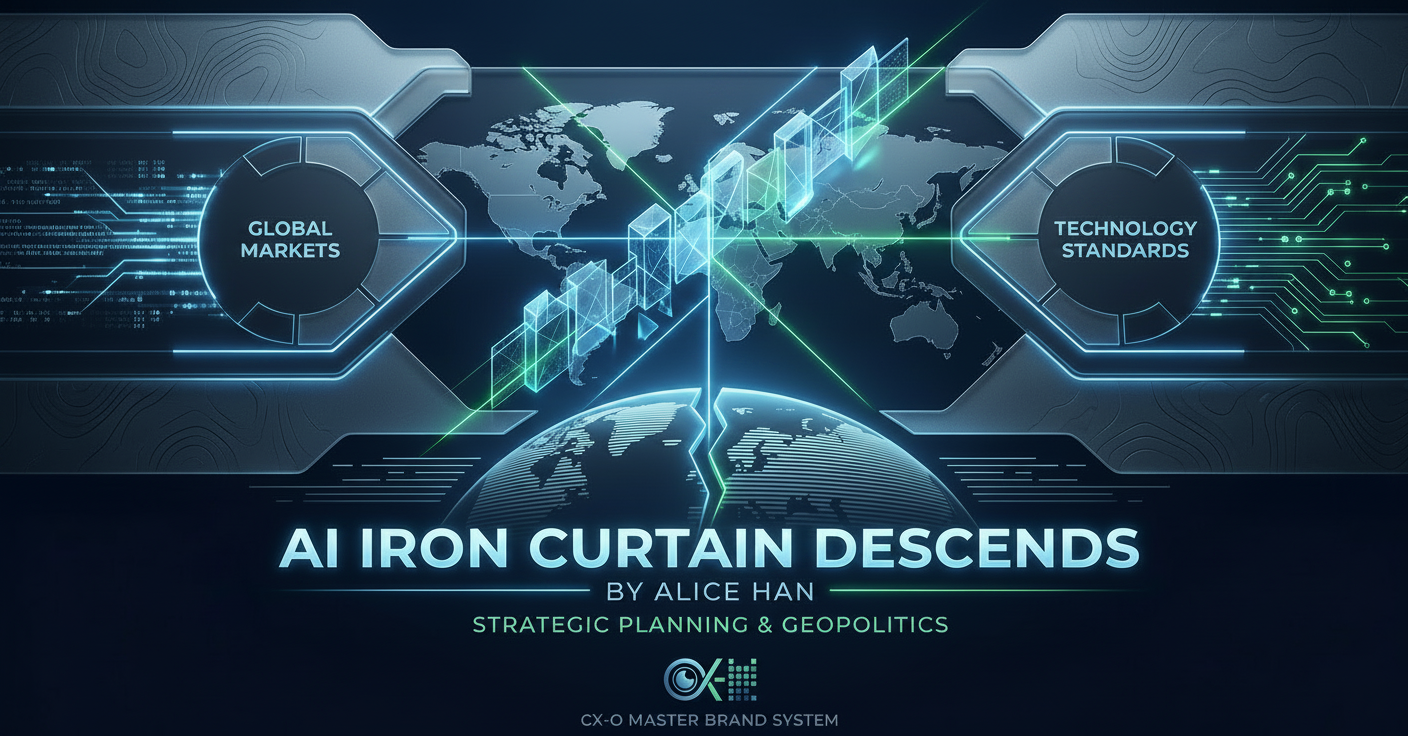
⑤ Geopolitical Tensions Are Driving an "AI Iron Curtain".
The increasing politicization of AI is leading to a likely future where different, largely incompatible AI models and ecosystems are developed and dominant within US/Western and Chinese spheres, creating significant fragmentation. (Alice Han on The Prof G Pod with Scott Galloway)
→ The Long View: Businesses must anticipate a bifurcated global AI landscape, strategically evaluating implications for data integrity, technological standards, intellectual property, and market access across different regions.
SIGNAL BOARD
🔥 HEATING UP
• Emotions as Information: Reframing emotions, even difficult ones, as valuable data rather than obstacles to be suppressed, enabling more productive conversations and personal growth. (Dr. Becky Kennedy on Radical Candor: Communication at Work)
• Flourishing environments and relationships: The intentional cultivation of spaces that prioritize psychological safety, connection, and growth, leading to higher engagement and individual potential. (Daniel Coyle on Coaching for Leaders)
• Bravery as a Skill vs. Trait 🆕: The growing recognition that bravery is a learnable skill, developed through voluntary action in the presence of fear, rather than an inherent quality. (Jill Schulman on The Leadership Podcast)
• Influence of Self-Image on Business Strategy: Acknowledging how one's internal self-perception in terms of mindset, style, and environment directly impacts business success and ambition. (Tonya Leigh on CEO School with Suneera Madhani)
• Priming and Framing in Communication: The strategic use of initial positive visions over problem-centric approaches to engage audiences and avoid triggering fear or resistance. (Oliver Aust on SPEAK LIKE A CEO)
👀 ON WATCH
• Ethnic Unity Law in China: A new Chinese law that appears to grant the country extraterritorial powers, enabling enforcement of Chinese law in other parts of the world, with unclear global implications. (James Kynge on The Prof G Pod with Scott Galloway)
• Bob the Monster (externalizing fear) 🆕: A psychological framework for managing fear and stress by externalizing inner critical emotions, making them less potent and more manageable. (Molly Graham on Worklife with Adam Grant)
• The 'Thought Ladder' 🆕: A technique for mindset shifts, suggesting that incremental shifts in thinking are more effective than drastic ones for overcoming limiting beliefs. (Tonya Leigh on CEO School with Suneera Madhani)
• Creator Economy Impact on Marketing: The increasing importance of earned media and third-party advocacy within the creator economy for brand relevance and authority. (Dara Treseder on Masters of Scale)
• Glue Club 🆕: An organically formed community for non-CEO leaders to find peer support and share experiences, addressing a common gap in leadership development. (Molly Graham on Worklife with Adam Grant)
THE BOTTOM LINE
In an increasingly uncomfortable world, the most resilient leaders and organizations will be those who proactively lean into challenges, view discomfort as a growth engine, and cultivate a culture of calculated bravery.
📖 Want the full episode breakdowns, guest details, and listen links?
APPENDIX
The Prof G Pod with Scott Galloway: "China Decode: Ballistic Missile Test, Europe's AC Addiction, and China's AI Coding Challenger" · 49 min · Featuring Alice Han, James Kynge
Strategic Context: Essential listening for leaders navigating global supply chains, geopolitical tech competition, or assessing regional stability in the Asia-Pacific.
The Prof G Pod with Scott Galloway: "What Comes After the Iran War? — with Rep. Jim Himes" · 60 min · Featuring Scott Galloway, Jim Himes
Strategic Context: A critical listen for executives and board members assessing geopolitical risk, especially in relation to global energy markets and the broader Middle East.
Radical Candor: Communication at Work: "Dr. Becky Kennedy - Good Inside - S8 | E19" · 58 min · Featuring Kim Scott, Dr. Becky Kennedy
Strategic Context: Valuable for leaders looking to foster psychological safety, improve communication, and address deeper relational dynamics within their teams.
Dare to Lead with Brené Brown: "Sports as Leadership Theater and Recognizing Near Enemies" · 43 min · Featuring Brené Brown, Adam Grant
Strategic Context: A must-listen for leaders and strategists aiming to embed intentionality and proactive planning into their organizational culture, moving beyond reactive modes.
Coaching for Leaders: "789: The Counterintuitive Secret to Creativity and Focus, with David Epstein" · 39 min · Featuring Dave Stachowiak, David Epstein
Strategic Context: Essential for innovation leaders and R&D executives seeking to optimize creative output by intelligently applying constraints rather than simply maximizing freedom.
Coaching for Leaders: "790: How to Help a Team Flourish, with Daniel Coyle" · 40 min · Featuring Dave Stahoviak, Daniel Coyle
Strategic Context: Recommended for HR leaders, team managers, and culture strategists focused on building high-performing, resilient teams through connection and autonomy.
Masters of Scale: "Cannes Lions’ battle of the brands: Starbucks’ stumble, World Cup ads, and more" · 31 min · Featuring Dara Treseder, Bob Safian
Strategic Context: Vital for CMOs and brand strategists to understand the evolving role of AI in marketing, the dynamics of the creator economy, and the importance of ethical governance in brand building.
SPEAK LIKE A CEO: "The Secret Forces That Make People Listen to You" · 52 min · Featuring Oliver Aust, Mo Bunnell
Strategic Context: Critical for executive leaders and anyone in a client-facing role looking to refine their communication for clarity, impact, and action, moving beyond mere information transfer.
CEO School with Suneera Madhani: "Self-Image As a Business Strategy: The Framework Every CEO Needs" · 44 min · Featuring Suneera Madhani, Tonya Leigh
Strategic Context: Pertinent for executive coaches, entrepreneurs, and founders seeking to leverage self-image and mindset as strategic assets for business growth and personal leadership.
Worklife with Adam Grant: "Why the smartest person in the room is asking the “dumb” questions | from TED Business" · 32 min · Featuring Modupe Akinola, Molly Graham
Strategic Context: Invaluable for leaders at rapidly scaling organizations, especially those grappling with effective delegation, overcoming fear of change, and fostering continuous learning.
The Leadership Podcast: "TLP518: The Bravery Effect: Jill Schulman on Why Courage Is a Skill, Not a Trait" · 44 min · Featuring Jill Schulman, Jim Vaselopulos
Strategic Context: Essential for leaders seeking to build resilience and foster a culture of calculated risk-taking, recognizing that courage is a trainable skill, not just an innate trait.
