
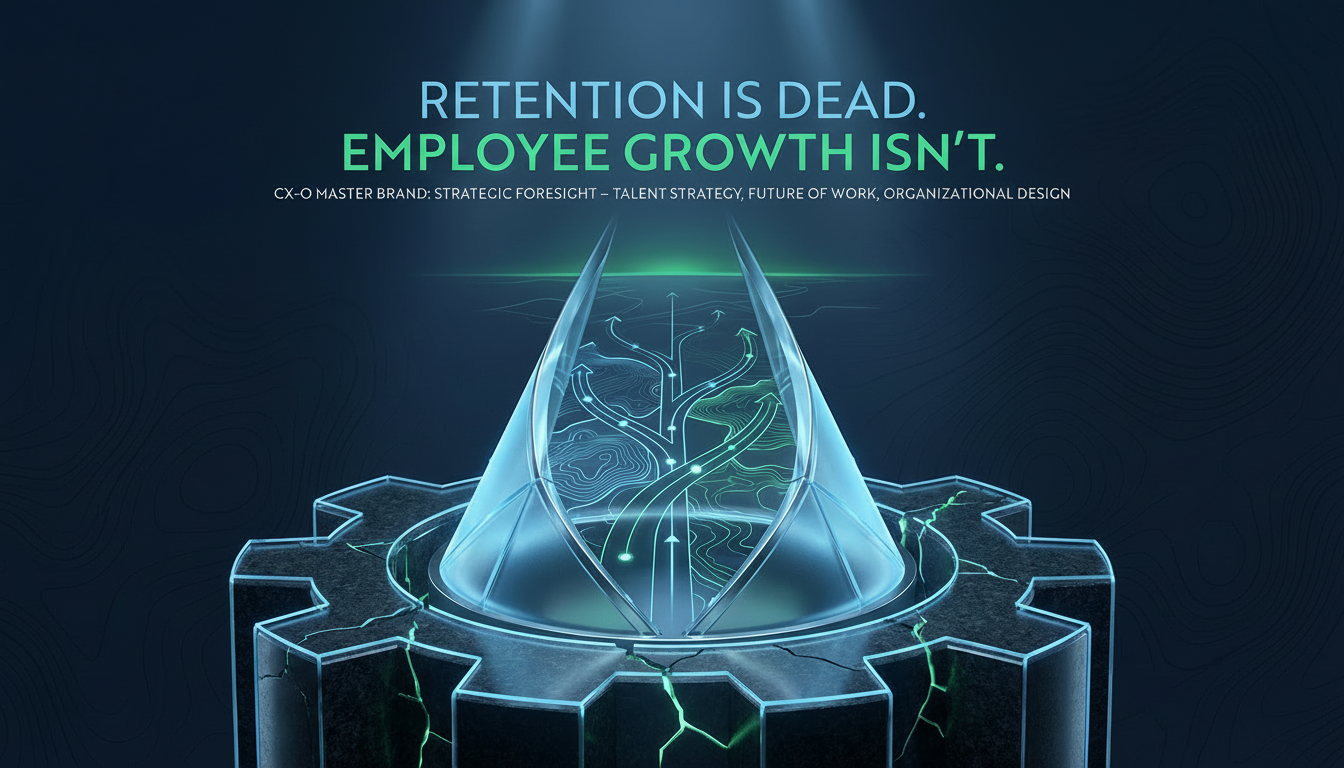
The deepest strategic advantage isn't just about what you build, but who you build it with, and how well you understand the invisible forces shaping their commitment.
📊 11 episodes across 9 podcasts
⏱ 455 minutes of intelligence analyzed
🎙 Featuring: Trisha Pasricha (Gastroenterologist, Harvard), Adam Grant (Organizational Psychologist and Professor, Wharton School of the University of Pennsylvania), Steve Cadigan (Author and Global Talent Strategist, former CHRO of LinkedIn), Jan Rutherford (Host, Founder of Self Reliant Leadership), Jim Vaselopulos (Host, Founder of Rafke Advisors), Matt Abrahams (Host, Lecturer of Strategic Communication, Stanford Graduate School of Business), Dan Heath (Author of Reset: How to Change What's Not Working, Host of What It's Like To Be Podcast, New York Times Bestselling Author), Bob Safian (Host of Masters of Scale, WaitWhat), Dr. Rana el Kaliouby (AI Scientist, Investor, Founder of Affectiva, Host of Pioneers of AI, Blue Tulip), Vinod Khosla (Legendary Tech Investor, Khosla Ventures), Mark Cuban (Investor, Entrepreneur), Arianna Huffington (Founder & CEO, Thrive Global), Suneera Madhani (Host, CEO School), Patrick Lencioni (Founder and Author, The Table Group), David Ko (Former CEO, Calm), Marcus Buckingham (Author of Design Love In: How to Unleash the Most Powerful Force in Business, Coaching + Education firm), Dave Stachowiak (Host, Coaching for Leaders), Muriel Wilkins (Host, Coaching Real Leaders), Oliver Aust (Host, Speak Like a CEO Academy), Chris Fenning (Author, Author of The First Minute), Kim Scott (Host, Radical Candor: Communication at Work), John Witt (Allen H. Duffy Class of 1960 Professor of Law at Yale Law School and Professor in the Yale History Department, Yale Law School and Yale History Department), Anthony Klotz (Organizational Psychologist and Professor of Management, UCL School of Management)
THE BIG SHIFT
The traditional employer-employee contract has dissolved, replaced by a "workquake" where loyalty isn't to the organization but to individual growth and development. Leaders can no longer expect long-term tenure; instead, they must proactively design organizations to support continuous learning, internal mobility, and even positive alumni networks, fostering an environment where employees choose to engage rather than feel compelled to stay.
The disappearing glue: Steve Cadigan, former CHRO of LinkedIn, argues on The Leadership Podcast that the workforce is fundamentally reshaping, a phenomenon he terms the "workquake." He provocatively states that "Retention Is Dead," and companies built "to last" are giving way to those "built to win right now." The implication is clear: loyalty metrics are misdirected. "The workforce is incredibly loyal — just not to you. They're loyal to growth," Cadigan observed, challenging leaders to shift their focus from retaining talent to enabling its evolution.
"The workforce is incredibly loyal — just not to you. They're loyal to growth."
— Steve Cadigan, Author and Global Talent Strategist, former CHRO of LinkedIn on The Leadership Podcast
Design for dynamism: This shift mandates a redesign of talent strategies, moving away from static roles and towards dynamic growth experiences. Cadigan notes that jobs requiring five years to master are obsolete, demanding agile learning designs within work itself. Marcus Buckingham, author of 'Design Love In,' underscores this on Coaching for Leaders, highlighting that employee flourishing, driven by feelings of control, significance, and growth, is the ultimate engine of productivity and loyalty, even if temporary. The fastest-growing companies already exhibit median employee tenures under four years, turning traditional retention models upside down.
Why it matters: This isn't just an HR problem; it's a strategic imperative. Organizations that fail to adapt to this "workquake" risk an inability to attract and retain the most vital talent. Leaders must become "experience makers," intentionally crafting environments that foster these feelings of growth and significance, acknowledging that continuous learning and internal mobility are the new competitive advantages. Those who cling to old models of loyalty will find themselves running "prisons," not companies, unable to compete for the talent that drives innovation and agility.
Board Question: How are we re-architecting our talent strategy to cultivate loyalty through growth and continuously develop internal capabilities, acknowledging shorter tenures as a new reality rather than a problem to be solved?
IDEAS IN BRIEF
① Unlock Latent Potential by Leveraging Existing Motivation.
The most effective way to drive change isn’t to create new motivation, but to identify and tap into the motivation people already possess, often hidden as 'latent desire' or 'wasted resources' within systems, as discussed by Dan Heath, author of "Reset: How to Change What's Not Working," on Think Fast Talk Smart: Communication Techniques.
→ Strategic Advantage: By focusing on "bright spots" and existing energy, leaders can achieve disproportionate returns on effort, catalyzing change more effectively than through persuasion alone.
② Humanize AI Before It Dehumanizes Us.
Dr. Rana el Kaliouby, an AI scientist and investor, emphasized on Masters of Scale the critical importance of a human-centric approach to AI that integrates emotional and social intelligence, moving beyond mere cognitive abilities. Arianna Huffington further underscored this, stating, "Humans will never be more intelligent than AI which is an incredible opportunity to realize that we are not defined by our iq. Let AI be more intelligent than humans, and let humans be wiser than AI."
→ Future-Proofing: Prioritizing human wisdom and integrating emotional intelligence into AI development ensures the technology augments creativity and collaboration rather than replacing human roles or reducing societal value.
③ Leaders Must Design for Individualized Flourishing, Not Generic Retention.
Marcus Buckingham, author of 'Design Love In,' discussed on Coaching for Leaders that genuine flourishing, driven by individual feelings of control, significance, and growth, fuels productivity and loyalty; leaders are ‘experience makers’responsible for intentionally designing these experiences.
→ Talent Optimization: Understanding and addressing the 'five sequential feelings' that foster love in leadership – control, harmony, significance, warmth, and growth – allows for the creation of environments where employees genuinely thrive, leading to deeper commitment and better results.
④ Master the First Minute to Maximize Communication Impact.
Chris Fenning, author of "The First Minute," highlighted on SPEAK LIKE A CEO that the initial minute of any conversation is critical, emphasizing frameworks like GPS (Goal, Problem, Solution) and TPO (Topic, Purpose, Output) for structuring effective requests and meetings. Fenning noted, "10 seconds of preparation saves 10 minutes of conversation."
→ Efficiency Multiplier: By explicitly designing the start of interactions (and emails) to be clear, concise, and aligned, organizations can significantly reduce wasted time and improve decision-making speed.
⑤ Founder Burnout is a Misunderstood Indicator of Misaligned Genius.
Patrick Lencioni, founder of The Table Group, explained on CEO School with Suneera Madhani that burnout, particularly for founders, often stems not from working too hard, but from focusing on activities that don’t align with one’s natural “working genius.” Suneera Madhani underscored this by stating, "A founder is not a founder is not a founder. A CEO is not a CEO is not a CEO."
→ Organizational Health: Identifying and leveraging individual core geniuses—and strategically delegating or outsourcing tasks that drain energy—is crucial for founder longevity, team effectiveness, and true organizational health.
SIGNAL BOARD
🔥 HEATING UP
• Love as a descriptor for extreme positive experiences: Customer and employee experiences are being reframed to focus on emotional resonance and "love" to drive behavior and loyalty. (Marcus Buckingham on Coaching for Leaders)
• Nobler Motive: Leaders are increasingly anchoring teams to a higher purpose to navigate constant priority changes and maintain team resilience. (Dave Stachowiak on Coaching Real Leaders)
• Human-centric AI: The focus shifts from AI's IQ to its emotional and social intelligence to achieve true AGI and ensure ethical development. (Dr. Rana el Kaliouby on Masters of Scale)
👀 ON WATCH
• 🆕 Jolts: Career and organizational disruptions are forcing employees to rethink their relationship with work, impacting retention and loyalty. (Anthony Klotz on Coaching for Leaders)
• 🆕 The Radical Fund (book): Historical precedents highlighting how strategic philanthropy and grassroots movements shaped societal change, relevant to modern challenges. (John Witt on Radical Candor: Communication at Work)
• 🆕 Fairness in Organizational Changes: Transparent and procedural justice explanations are crucial to mitigating negative employee responses during tough moments like pay cuts. (Anthony Klotz on Coaching for Leaders)
🧊 COOLING OFF
• Blindly trusting gut instincts: The notion that gut feelings are infallible is being debunked, emphasizing the need for conscious verification, especially in unfamiliar situations. (Trisha Pasricha on Worklife with Adam Grant)
• Probiotics for most conditions are not recommended: Gastroenterologists do not recommend probiotics for the majority of conditions, challenging widespread marketing claims. (Trisha Pasricha on Worklife with Adam Grant)
• AI misused as cost-cutting tool rather than capability enhancer: Companies face challenges aligning AI deployments with profit, often failing when used for pure replacement versus human augmentation. (Steve Cadigan on The Leadership Podcast)
THE TENSION
No explicit disagreements crossing the minimum divergence threshold were detected in this period's conversations about strategic topics. However, there's a subtle tension regarding the role of AI in an organization’s value proposition and what it truly enables.
🔵 The AI Augmentation Optimist: Speakers like Steve Cadigan on The Leadership Podcast and Dr. Rana el Kaliouby on Masters of Scale emphasize AI's potential to augment human capabilities, freeing individuals from mundane tasks to focus on meaningful work. They see AI as a tool to enhance human wisdom and creativity, provided it's integrated with emotional intelligence and ethical guardrails. This view suggests AI's primary value is in elevating human performance and fostering growth.
🔴 The AI Reality Check: While not a direct contradiction, the sentiment from David Ko, former CEO of Calm on Masters of Scale, suggests a more cautious approach. His company actively resisted AI chatbots due to privacy concerns and the critical trust needed in sensitive areas like mental health. This perspective implies that for some industries or applications, the strategic value of AI is heavily outweighed by the risks, or that its current limitations prevent responsible deployment.
The Strategist's Read: The underlying tension is whether AI is fundamentally a tool for human enhancement or if its current limitations, particularly in trust and emotional intelligence, demand a more conservative and cautious integration roadmap, especially in sensitive domains.
THE BOTTOM LINE
Navigating the modern enterprise demands a strategic pivot from traditional loyalty to cultivating growth, understanding the hidden forces of human motivation, and carefully deploying technology to amplify wisdom, not just intelligence.
YOUR MOVE
1. Inventory Talent Growth Opportunities: Map internal growth pathways and learning opportunities to actively demonstrate commitment to employee development, acknowledging that loyalty is tied to growth, not tenure.
2. Launch a "Motivation Audit": Identify latent motivations or "wasted resources" within your teams or customer base that could be leveraged to drive change, rather than consistently trying to create new incentives.
3. Review AI Ethics and Emotional Intelligence: Assess where your organization's AI initiatives stand on human-centric design, emotional intelligence, and data privacy, particularly in sensitive user interactions, to ensure alignment with human values.
4. Implement “Working Genius” Assessments: Equip leaders with tools like Patrick Lencioni's “Working Genius” to understand their own and their team's core strengths, enabling better role alignment and reducing burnout.
5. Standardize "First Minute" Communication: Institute a practice across leadership to optimize the initial 60 seconds of all critical conversations and emails using frameworks like GPS or TPO to enhance clarity and efficiency.
📖 Want the full episode breakdowns, guest details, and listen links?
APPENDIX
Coaching for Leaders: "778: How to Help People Flourish, with Marcus Buckingham" · 40 min · Featuring Marcus Buckingham ▶ Listen
Coaching for Leaders: "777: How to Help Employees Handle Tough Moments, with Anthony Klotz" · 38 min · Featuring Anthony Klotz ▶ Listen
Coaching Real Leaders: "Ask Muriel Anything with Special Guest Dave Stachowiak" · 44 min · Featuring Dave Stachowiak ▶ Listen
CEO School with Suneera Madhani: "Building Teams That Actually Work with Patrick Lencioni" · 44 min · Featuring Patrick Lencioni ▶ Listen
Masters of Scale: "Humanize AI before it dehumanizes us, with Dr. Rana el Kaliouby at SXSW" · 43 min · Featuring Dr. Rana el Kaliouby ▶ Listen
Masters of Scale: "The “most stressed” wellness CEO, with Calm’s David Ko" · 33 min · Featuring David Ko ▶ Listen
Radical Candor: Communication at Work: "How to Remake America S8 | E9" · 47 min · Featuring John Witt ▶ Listen
SPEAK LIKE A CEO: "319: How to Nail the First Minute of Any Conversation" · 40 min · Featuring Chris Fenning ▶ Listen
The Leadership Podcast: "TLP506: Retention Is Dead: The Workquake Reshaping Talent" · 44 min · Featuring Steve Cadigan, Jan Rutherford, Jim Vaselopulos ▶ Listen
Think Fast Talk Smart: Communication Techniques: "279. Rethinks: How to Leverage What People Already Want" · 44 min · Featuring Dan Heath ▶ Listen
Worklife with Adam Grant: "ReThinking: Can you trust your gut? with GI doctor Trisha Pasricha" · 38 min · Featuring Trisha Pasricha, Adam Grant ▶ Listen
