
Ditch the indiscriminate cost-cutting, it’s a symptom fix. Smart money is redesigning and optimizing activities, leveraging AI strategically, and embedding finance deeper into operations to find value.
📊 8 episodes across 6 podcasts
⏱ 324 minutes of intelligence analyzed
🎙 Featuring: CJ Gustafson (Run the Numbers), Chris Nesbitt (PSG), CJ (Run the Numbers), Scott Thorell (Benetrends)
|

The Big Shift
After decades of operating as traditional consulting giants, even the likes of McKinsey & Company are facing a stark reality: clients no longer want just PowerPoints; they demand implemented solutions and outcome-based results. This is a foundational shift in how professional services firms, especially those in the enterprise consulting space, are delivering value and structuring their engagements.
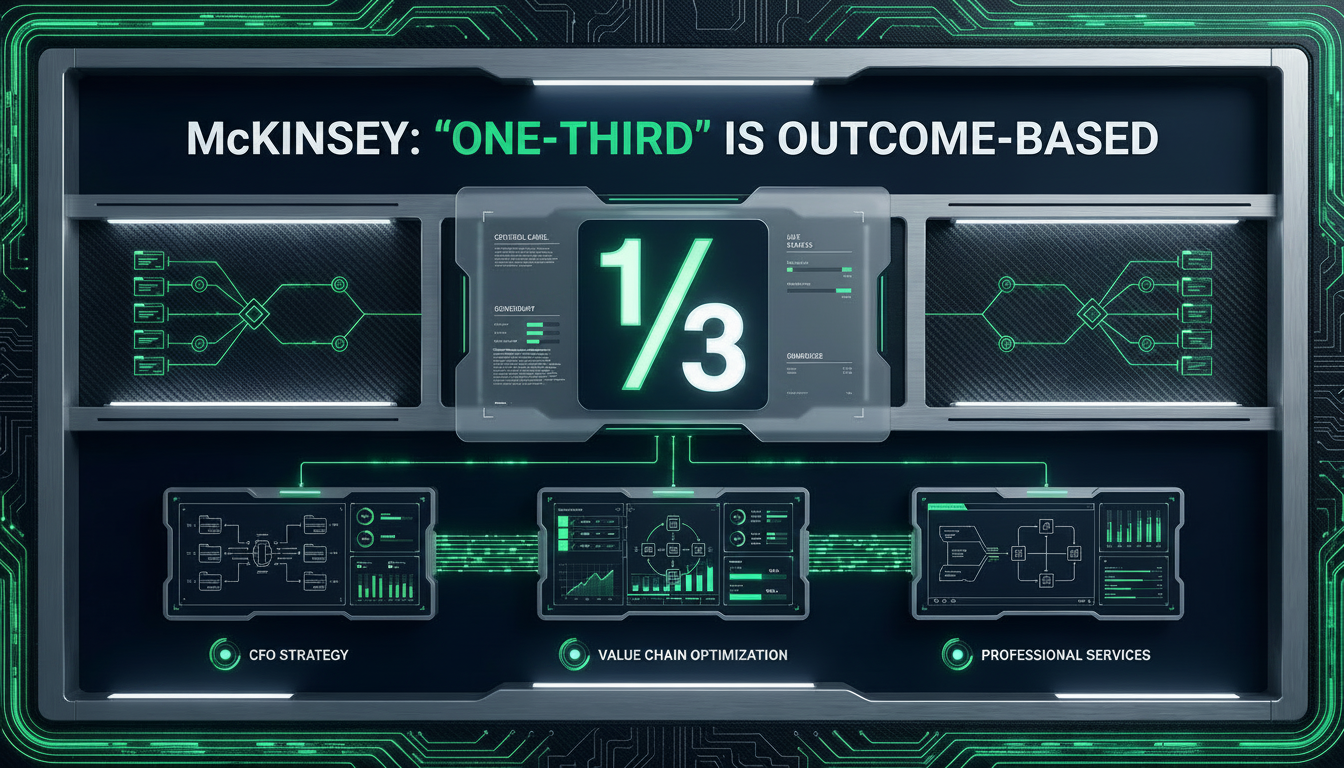
Yuval Atsmon, CFO & Senior Partner at McKinsey & Company, shared that approximately a third of their work is now outcome-based, where payment is directly tied to validated financial impact or key performance indicators. This moves away from the historical billable hours model that dominated the industry. "McKinsey at a point of time where clients expect, not PowerPoint, but implemented solutions," Yuval Atsmon, CFO & Senior Partner at McKinsey & Company on CFO THOUGHT LEADER noted, continuing, "Some of them are new processes and new ways of working and new capabilities. And that requires us to invest capital."
"About a third of the work we do now is outcome based. And we only get paid if we have a CFO on the other side that confirms that the financial impact that was set as a goal or other KPIs that are a proxy of financial impact have been fully vetted and confirmed."
— Yuval Atsmon, CFO & Senior Partner at McKinsey & Company on CFO THOUGHT LEADER
Why it matters: This transformation is not just about pricing; it's about shifting the entire value proposition. For operators buying consulting services, it means greater accountability and a direct link to business outcomes. For those selling professional services, it necessitates a deeper integration of technology, data, and talent to deliver tangible, measurable results, rather than just advice. It implies a higher bar for demonstrating value and managing risk on both sides of the engagement.
The Operational Implication: If even the most established consulting firms are recalibrating their models to focus on outcomes, it signals a broader market demand for tangible value over theoretical solutions. This trend will inevitably trickle down, pressing all service providers to rethink their engagement models and prove ROI.
The Rundown
① Don't just cut costs; redesign your business for efficiency.
Indiscriminate cost-cutting is often a band-aid solution that treats symptoms rather than addressing underlying economic issues, potentially destroying long-term growth. (Steve Coughran on Strategy Meets Finance)
→ The Operator's Take: Instead of slashing, analyze your activity streams to find opportunities for strategic business redesign and automation to fundamentally shift your cost structure and drive sustainable profitability.
② Authentic relationships are the new competitive advantage in deal sourcing.
In an increasingly competitive lower middle market for private equity deals, building genuine relationships and demonstrating authenticity and vulnerability are crucial for sourcing quality opportunities and winning founder trust. (Chris Nesbitt on Run the Numbers)
→ Key Insight: Deals are rarely purely transactional. Your network and reputation for integrity can become your greatest asset in differentiating your firm or company when competing for acquisitions or partnerships. Chris Nesbitt, Managing Director at PSG on Run the Numbers declared "Authenticity and vulnerability... I find that to be a massive edge in that sort of sourcing motion."
③ CFOs must view the entire organization as a value chain, not just their department.
The evolving role of the CFO demands a broader perspective, focusing on how all parts of the business contribute to value, rather than staying siloed in finance. (Catherine Clark on CFO 4.0 - The Future of Finance)
→ The Operator's Take:Embed finance leaders into sales and operations, empowering them to understand and optimize the end-to-end process, shifting from scorekeeper to strategic partner. Catherine Clark, Lead CFO Mentor and Director at GrowCFO and Cristallum Limited on CFO 4.0 - The Future of Finance noted that "When you''re trying to become a sort of influential, impactful leader, it''s the soft skills that become the dominant part in your success at that level."
④ Consumer-first AI builds trust and drives adoption in high-stakes fields like financial services.
Designing AI solutions that directly address real consumer needs, provide transparent explanations, and enable actionable steps is paramount for trust and effective integration, particularly in personal finance. (Debbie Hsu on Digital Transformation Podcast)
→ The Operator's Take: Focus on AI as a "co-pilot" for users, not a "driver" of decisions. The goal is to augment human capability and provide clarity, ensuring people can act meaningfully on AI-generated insights.
Signal Board
🔥 HEATING UP
• Building relationships and professional network for CFOs: More emphasis is being placed on CFOs developing strong soft skills and external networks to become more influential and strategic leaders. (Catherine Clark on CFO 4.0 - The Future of Finance)
• CFO involvement in sales and operational understanding: CFOs are increasingly expected to have hands-on understanding and influence over sales and operational processes beyond traditional financial reporting. (Scott Thorell on CFO THOUGHT LEADER)
• Client Expectation Shift to Implemented Solutions: Clients, even of top-tier consulting firms like McKinsey, now expect concrete, implemented solutions and measurable outcomes rather than just strategic advice. (Yuval Atsmon on CFO THOUGHT LEADER)
👀 ON WATCH
• Centralized data and AI capabilities: Multi-brand organizations are centralizing data and AI platforms to achieve economies of scale and enable smaller brands to access advanced tools they couldn't afford individually. (Kumar “Kartik” Kartikeya on Technovation with Peter High (CIO, CTO, CDO, CXO Interviews))
• "speedboat" venture strategy: Large corporations are using corporate venture capital to identify and invest in emerging technologies through smaller, agile funds that act as "speedboats" for the "supertanker" parent company. (Ro Gupta on Technovation with Peter High (CIO, CTO, CDO, CXO Interviews))
• Mentoring vs. Coaching: There's a clearer distinction being made between mentoring (experience-based insights) and coaching (self-discovery, unlocking potential), with both playing critical roles for CFO development. (Catherine Clark on CFO 4.0 - The Future of Finance)
🧊 COOLING OFF
• Critique of Non-Strategic Cost Cutting: Indiscriminate cost-cutting is increasingly viewed as a counterproductive approach that treats symptoms and can lead to a business's downward spiral. (Steve Coughran on Strategy Meets Finance)
• Misconceptions of young investors on deal pricing: The idea that a low price can compensate for a bad market or product is being challenged, aligning with Munger's principle of buying great businesses at fair prices. (Chris Nesbitt on Run the Numbers)
The Bottom Line
The role of the Operator is evolving beyond reactive problem-solving; it's now about proactive redesign, strategic value creation, and leveraging AI not just as a tool, but as a core component of a future-proof operating model.
📖 Want the full episode breakdowns, guest details, and listen links?
Quick Appendix
Technovation with Peter High (CIO, CTO, CDO, CXO Interviews): "How Catalyst Brands Uses Data and AI to Scale Across Retail Brands" · 25 min · Featuring Kumar “Kartik” Kartikeya ▶ Listen
Recommended Listening: For COOs overseeing multi-brand portfolios looking to centralize services and scale technology effectively while preserving brand autonomy.
CFO 4.0 - The Future of Finance: "269. CFO 4.0 Revisited: Accelerating your impact as a CFO with coaching with Catherine Clark" · 42 min · Featuring Catherine Clark ▶ Listen
Recommended Listening: For finance leaders aiming to transition from technical experts to strategic influencers through improved soft skills and self-awareness.
Run the Numbers: "How Great Deals Are Found, Evaluated, and Won | PSG’s Chris Nesbitt" · 55 min · Featuring Chris Nesbitt ▶ Listen
Recommended Listening: For Private Equity Operating Partners and M&A leaders looking for an edge in competitive deal sourcing through relationship building and strategic authenticity.
Strategy Meets Finance: "Cutting Costs Is the Wrong Move (Do This Instead) | Ep 227" · 17 min · Featuring Steve Coughran ▶ Listen
Recommended Listening: For any leader grappling with financial pressures and considering cost-cutting, offering an alternative framework for sustainable operational redesign.
CFO THOUGHT LEADER: "1180: Where Finance Meets the Real World | Scott Thorell, CFO Benetrends" · 52 min · Featuring Scott Thorell ▶ Listen
Recommended Listening: Ideal for finance professionals transitioning into or operating within entrepreneurial environments, seeking to balance financial rigor with operational involvement.
CFO THOUGHT LEADER: "1181: What AI Means for the Future of Finance Leadership | Yuval Atsmon, CFO & Sr Partner, McKinsey & Company" · 64 min · Featuring Yuval Atsmon ▶ Listen
Recommended Listening: For senior leaders in professional services or large organizations navigating the shift from traditional service models to outcome-based and tech-driven approaches.
Digital Transformation Podcast: "Consumer-First AI in Financial Services" · 21 min · Featuring Debbie Hsu ▶ Listen
Recommended Listening: For product and technology leaders designing AI solutions in regulated industries, emphasizing trust, transparency, and actionable insights for end-users.
Technovation with Peter High (CIO, CTO, CDO, CXO Interviews): "Ro Gupta on Toyota’s Speedboat Strategy for Venture-Driven Innovation" · 48 min · Featuring Ro Gupta ▶ Listen
Recommended Listening: For innovation, strategy, and corporate development leaders exploring how large enterprises can strategically invest in and integrate emerging technologies.
