
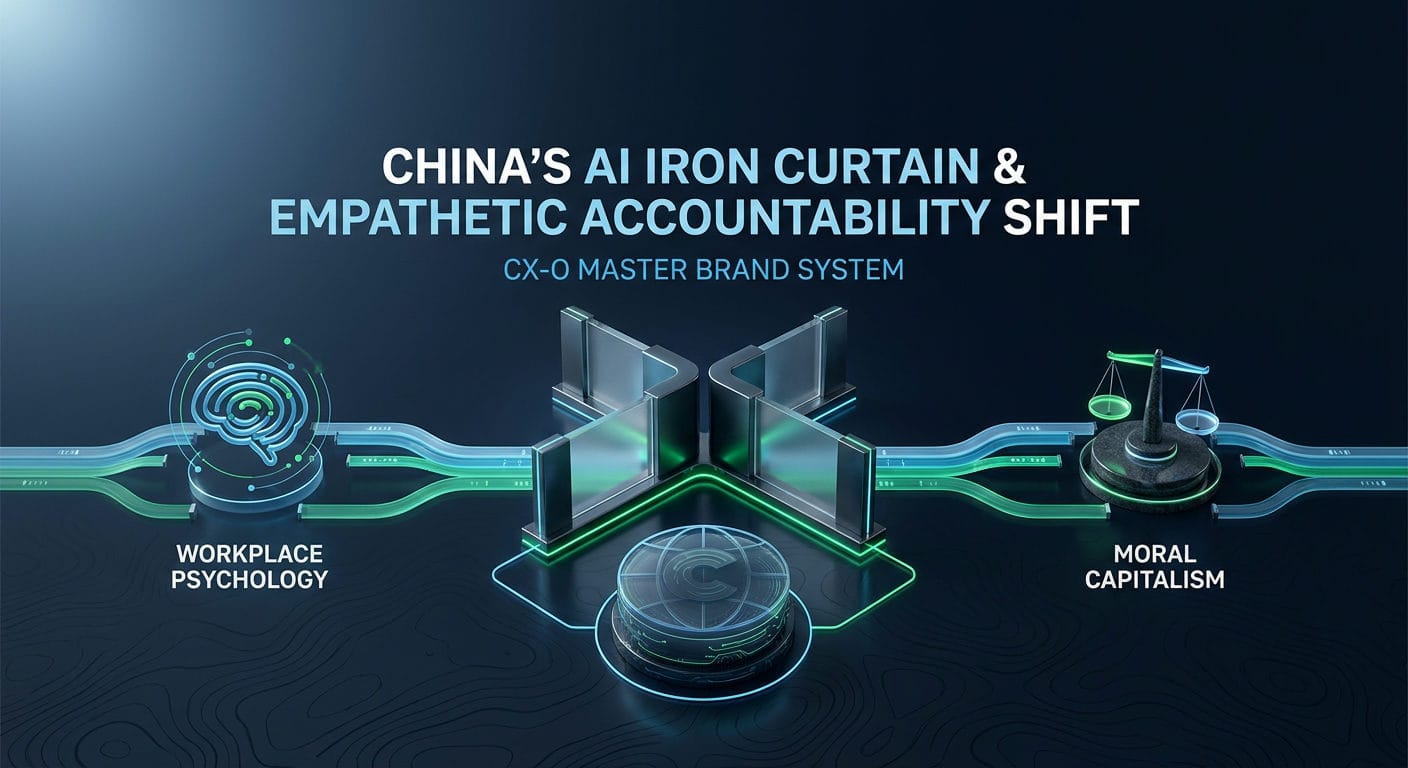
The strategic challenge of 2024 is operating with empathetic accountability in an environment of accelerating uncertainty, whether geopolitical, technological, or organizational.
📊 11 episodes across 6 podcasts
⏱ 479 minutes of intelligence analyzed
🎙 Featuring: Jan Rutherford, Jim Vaselopulos, Jahmy Hindman, Ranna El Kalyubi
|

THE BIG SHIFT
The fundamental nature of leadership is shifting from command-and-control to cultivation and empathetic accountability. Across industries, from agriculture to venture capital to team management, the most effective leaders are those who foster environments of psychological safety, individual growth, and purpose-driven action, rather than relying on rigid systems or pure top-down directives. This demands a nuanced approach that prioritizes understanding and developing people while holding firm on expectations, a concept termed "empathetic accountability."
David Gray, CEO of FedUp Foods, articulated this from a values-driven business perspective, explaining how balancing profit with mission requires deep understanding of employee needs, particularly during crises (David Gray, CEO of FedUp Foods on The Leadership Podcast). He underscored that "If you don't have the right values, then you can't nurture a culture." Similarly, Daniel Coyle, author of "Flourish," argued that leadership is more akin to gardening than machine-building, where the focus is on creating conditions for growth rather than controlling every input. He highlighted that "Nobody flourishes alone, nobody thrives alone. We're kind of wired to become our best selves in and through other people." (Daniel Coyle, Author of Flourish on Coaching for Leaders).
This shift extends to the very structure of organizations. Jahmy Hindman, CTO of John Deere, revealed how even in heavily industrialized agriculture, their vision is to provide a "master gardener experience" for individual plant care, leveraging AI to nurture growth at a granular level. This parallels the human-centric approach needed for teams. The implication is clear: leaders must cultivate environments where individuals feel seen, safe, and empowered to contribute their full selves, recognizing that genuine flourishing drives resilience and innovation in an increasingly complex world.
"We have deep need to feel psychologically safe with groups where we don't feel safe, we start managing our status and we show up about 20% of ourselves in these spaces instead of our whole selves."
— Daniel Coyle, Author of Flourish on Coaching for Leaders
The Board Question: How are we actively shifting our leadership development programs and organizational design to prioritize empathetic accountability and foster environments where our people can truly flourish amidst external volatility?
IDEAS IN BRIEF
① China's AI Ascent Triggers Geopolitical Tech Divide.
Beijing is actively building an "AI Iron Curtain," blocking foreign acquisitions of critical AI startups and facilitating domestic control, signaling deep strategic competition in advanced technology (James Kynge on The Prof G Pod with Scott Galloway).
→ Strategic Implications: Western companies need to prepare for a bifurcated global AI ecosystem, where interoperability and data exchange with Chinese-developed AI models may become increasingly restricted. This could necessitate parallel development tracks or strategic detachment.
② Faith Emerges as a Taboo-Breaking Asset in the Workplace.
Leaders like Stacy Brown-Philpot are openly integrating faith discussions and community-building into corporate settings, finding it a powerful driver of deeper connections and resilience, challenging historical workplace taboos (Stacy Brown-Philpot, Founder of Cherry Rock Capital on Worklife with Adam Grant).
→ The Opportunity: Boards should consider how genuine open dialogue around personal values and beliefs, including faith, can unlock deeper employee engagement and foster psychological safety, rather than being seen as a potential source of conflict.
③ Redefining Leadership Through "Unfinished Childhood Business."
The workplace often serves as a stage for unresolved psychological patterns from childhood, implying that effective leadership requires understanding and addressing these deeper dynamics, not just professional competencies (Kim Scott on Radical Candor: Communication at Work).
→ The Insight: Investing in self-awareness and emotional intelligence for leaders is essential for building psychologically safe teams, as unaddressed personal histories can subtly impact communication, conflict resolution, and team dynamics, manifesting as "Crucial Connection Capital."
④ Purpose-Driven Capitalism Reclaims Adam Smith's Morality.
Modern capitalism has deviated from Adam Smith's original vision, where morality acted as a "lubricant" for markets, not a friction. There's a call for leaders to re-embrace justice, prudence, and benevolence beyond shareholder primacy (Patrick Ryan, Author of "The Moral Market" on The Leadership Podcast).
→ The Imperative: Boards must scrutinize how corporate governance and executive incentives align with broader societal values and a long-term, ethical market approach, moving beyond short-term shareholder value to a more holistic view of stakeholder impact.
⑤ Executive Search Undermined by Implicit Bias, Not Meritocracy.
Executive hiring is frequently not a true meritocracy, with decisions often swayed by implicit biases and existing networks rather than qualifications alone, especially for diverse candidates (Ify Walker, Founder and CEO of Offor on Worklife with Adam Grant).
→ Actionable Insight: To truly diversify leadership, boards and executive search committees must implement robust, structured processes designed to consciously counteract implicit biases and expand networks beyond traditional pools, ensuring genuine merit-based selection.
SIGNAL BOARD
🔥 HEATING UP
• The Work Twisties: A unique form of career disorientation, distinct from burnout, where seasoned professionals lose their ability to perform familiar tasks due to psychological disconnect (Ify Walker on Worklife with Adam Grant).
• AI-Powered Digital Assistants for Farm Management: John Deere's vision of integrating AI digital assistants into farming to proactively manage operations, optimize decision-making, and automate tasks (Jahmy Hindman on Masters of Scale).
• Flexible Employment in China: The gig economy now accounts for 44% of China's workforce, with 320 million workers, highlighting significant shifts in labor and social stability implications (James Kynge on The Prof G Pod with Scott Galloway).
• Targeting Influential Niche Audiences in Podcasting: TBPN's success in building a media business model focused on highly specific, decision-maker audiences through integrated, annual sponsorships instead of mass reach (John Coogan on The Prof G Pod with Scott Galloway).
🆕 ON WATCH
• China's Ethnic Unity Law Extraterritoriality: New legislation that appears to give China powers to enforce its laws in other parts of the world, raising international concerns (James Kynge on The Prof G Pod with Scott Galloway).
• Humanoid Robots for Agricultural Labor: John Deere is exploring humanoid robots for tasks humans don't want to do, like grain bin cleaning, and for dexterous harvesting of delicate, high-value crops (Jahmy Hindman on Masters of Scale).
• Impartial Spectator in Leadership Decisions: Re-emerging Adam Smith concept for leaders to make principled decisions by considering how a knowledgeable, impartial person would view their actions (Patrick Ryan on The Leadership Podcast).
• Work as a Substitute for Religious Fulfillment: A growing trend where the intensity and purpose found in building a company can replace traditional faith as a primary source of meaning for founders (Stacy Brown-Philpot on Worklife with Adam Grant).
❄️ COOLING OFF
• "If You Don't Have Anything Nice To Say": The traditional communication adage is being challenged, with experts arguing it can prevent necessary, constructive feedback and lead to misunderstandings (Kim Scott on Radical Candor: Communication at Work).
• Shareholder Primacy: The singular focus on maximizing shareholder value is being re-evaluated against Adam Smith's original moral framework for markets, which emphasized broader ethical considerations (Patrick Ryan on The Leadership Podcast).
• Traditional Moneyball Analytics in Team Sports: The Cleveland Guardians' shift away from predictive analytics to a player development model emphasizing individual growth, suggesting limitations of purely data-driven approaches in high-performing teams (Daniel Coyle on Coaching for Leaders).
• Instinctive Parenting: The idea that effective parenting comes naturally is being debunked, with research suggesting that only the style of one's own childhood parenting is instinctual, highlighting the need for learned skills (Dr. Becky Kennedy on Radical Candor: Communication at Work).
THE TENSION
The contemporary debate centers on the role of leaders in fostering individual growth and self-trust versus relying on external expertise and structured advice in an increasingly complex and ambiguous business landscape.
🔵 Cultivating Internal Wisdom and Self-Trust: Many voices this week emphasized the critical need for individuals, and by extension, leaders, to develop strong internal compasses. Ify Walker urged those experiencing "work twisties" to stop seeking external advice and instead distinguish between facts and stories to rebuild self-trust (Ify Walker on Worklife with Adam Grant). Similarly, Dr. Becky Kennedy noted that in both parenting and leadership, "the only thing that comes naturally... is how you were parented," implying that effective approaches are learned, not innate, and require conscious internal development (Dr. Becky Kennedy on Radical Candor: Communication at Work).
🔴 The Enduring Value of External Guidance and Frameworks: Conversely, others highlighted the necessity of frameworks and structured leadership to navigate modern challenges. David Gray, facing a crisis, developed a four-point playbook for leadership, emphasizing clear communication and external operational integrity (David Gray on The Leadership Podcast). Even in creative fields, Chef Marcus Samuelsson proactively transformed his business into a media company to control his narrative, recognizing that external amplification was necessary to share diverse stories (Marcus Samuelsson on Masters of Scale). These perspectives acknowledge that while internal guidance is crucial, external tools, structures, and even strategic external advice remain indispensable for navigating growth and overcoming systemic barriers.
The Strategist's Read: The path forward demands a dialectical approach: cultivate robust internal self-trust and discernment within your teams and yourself, but don't shy away from adopting or adapting structured frameworks and seeking strategic external counsel that can unlock new possibilities or provide necessary guardrails.
THE BOTTOM LINE
As leaders, our primary mandate is to cultivate growth through empathetic accountability, navigating both the psychological nuances of our teams and the geopolitical realities of our markets with sharp, values-driven discernment.
📖 Want the full episode breakdowns, guest details, and listen links?
APPENDIX
The Leadership Podcast: "TLP520: Empathy Without Lowering the Bar with David Gray" · 38 min · Featuring David Gray ▶ Listen
Recommended for: Leaders balancing profit and purpose in complex environments, particularly those grappling with employee well-being and crisis management.
Masters of Scale: "Pioneers of AI: John Deere's AI vision for future farms" · 37 min · Featuring Jahmy Hindman ▶ Listen · Apple Podcasts
Recommended for: Executives interested in the cutting edge of AI application beyond tech, specifically advanced manufacturing, agriculture, and robotics.
The Prof G Pod with Scott Galloway: "China Decode: Ballistic Missile Test, Europe's AC Addiction, and China's AI Coding Challenger" · 49 min · Featuring Alice Han ▶ Listen · Apple Podcasts
Recommended for: Strategists and investors monitoring geopolitical tensions, global trade imbalances, and the intensifying US-China tech competition.
Worklife with Adam Grant: "Why faith has a place at work with Stacy Brown-Philpot" · 40 min · Featuring Stacy Brown-Philpot ▶ Listen · Apple Podcasts
Recommended for: Leaders exploring how to foster deeper connections and integrity in the workplace through authentic conversations around personal values and faith.
Radical Candor: Communication at Work: "Dr. Becky Kennedy - Good Inside - S8 | E19" · 58 min · Featuring Dr. Becky Kennedy ▶ Listen · Apple Podcasts
Recommended for: Managers and executives seeking to improve communication, set boundaries, and build stronger relationships in their teams by applying parenting principles.
Masters of Scale: "Chef Marcus Samuelsson on the ingredients for success" · 36 min · Featuring Marcus Samuelsson ▶ Listen · Apple Podcasts
Recommended for: Entrepreneurs and creative leaders looking to build brands that authentically reflect diverse stories and drive community engagement.
Worklife with Adam Grant: "How to find your way when you feel lost with Ify Walker" · 36 min · Featuring Ify Walker ▶ Listen · Apple Podcasts
Recommended for: Professionals navigating career transitions, burnout, or psychological blockages, and leaders rethinking meritocracy in hiring.
The Prof G Pod with Scott Galloway: "Why OpenAI Bought a Podcast — with TBPN’s John Coogan and Jordi Hays" · 62 min · Featuring John Coogan ▶ Listen · Apple Podcasts
Recommended for: Founders and media strategists interested in innovative business models for content creation and audience engagement in niche markets.
Coaching for Leaders: "790: How to Help a Team Flourish, with Daniel Coyle" · 40 min · Featuring Daniel Coyle ▶ Listen · Apple Podcasts
Recommended for: Coaches, HR professionals, and leaders committed to creating environments that foster psychological safety, growth, and team flourishing.
The Prof G Pod with Scott Galloway: "China Decode: China Drops Its Jobs Target, Tencent Buys Back Manus, and the Rise of "Tier 3 City" Living" · 50 min · Featuring Alice Han ▶ Listen
Recommended for: Macroeconomists, policymakers, and global business strategists tracking China's labor market, AI adoption, and socio-economic shifts.
The Leadership Podcast: "TLP519: The Leadership Idea We Missed for 250 Years" · 33 min · Featuring Patrick Ryan ▶ Listen · Apple Podcasts
Recommended for: Leaders and board members seeking to ground their strategic decisions in a more ethical and sustainable long-term view of capitalism.
