The strategic leadership advantage is shifting from accumulated knowledge to orchestrating AI-powered teams, demanding a new blueprint for managing talent, trust, and transformation.
📊 11 episodes across 8 podcasts
⏱ 450 minutes of intelligence analyzed
🎙 Featuring: Trisha Pasricha (Gastroenterologist, Harvard), Adam Grant (Organizational Psychologist and Professor, Wharton School of the University of Pennsylvania), Kim Scott (Host, Radical Candor: Communication at Work)
THE BIG SHIFT
The value of accumulated leadership experience is facing rapid depreciation. The traditional model, where leaders are the primary knowledge holders, is being fundamentally reshaped by AI, demanding a pivot towards orchestration rather than instruction. This shift challenges established hierarchies and necessitates a re-evaluation of how leaders are developed and how teams are empowered.
The obsolescence of traditional leadership: AI is quickly eroding the "leadership premium" once associated with vast experience and knowledge. As Will Linssen, CEO of Global Coach Group, provocatively states:
"Smart people with AI can out-leader you very quickly. Be ready for that."
— Will Linssen, CEO, Global Coach Group on The Leadership Podcast
This suggests that leaders who cling to outdated models of expertise will be outmaneuvered by those who leverage AI effectively. The focus is no longer on possessing all the answers but on knowing how to ask the right questions and empowering AI-savvy team members to find them.
From "me" to "we" in coaching: The failure of traditional leadership coaching often stems from its individualistic focus. Linssen argues for a "project we" approach, integrating team members into a leader's development journey. This mutual accountability not only boosts coworker satisfaction with a leader's growth but also fosters a more collaborative environment where leadership is seen as a collective effort, not a solitary pursuit. In an AI-augmented world, where complex problems require diverse perspectives, this shift away from ego-driven leadership becomes paramount.
The future leader as an "orchestra conductor": Instead of being a knowledge repository, the modern leader must become an orchestra conductor, skilled at synthesizing AI-generated insights and guiding diverse, intelligent teams. This means fostering environments where creativity thrives, trust is paramount, and team members feel empowered to experiment and innovate with new tools. The ability to navigate these dynamics, rather than to dictate, will define strategic success in the coming years.
Closing thought for the board: How are we actively re-skilling our leadership to lead AI-empowered teams, and are our development programs fostering collaboration over individual heroics?
IDEAS IN BRIEF
① New Workforce Dynamics Demand "Human with AI" Reinvention.
The impact of AI on the labor force will necessitate a "reinvention" for nearly everyone, emphasizing skill-based adaptability over job displacement. Aneesh Raman (Chief Economic Opportunity Officer, LinkedIn) on The Prof G Pod with Scott Galloway highlights that the fastest-growing demographic in the labor market are workers aged 55+, challenging previous assumptions about who is most affected by technological change.
→ Strategic Imperative: Businesses must invest in continuous reskilling and upskilling programs to prepare their workforce for human-AI collaboration, fostering a culture of perpetual learning, especially for experienced professionals.
② Agentic Commerce Threatens Brand Loyalty and Favors Efficiency.
Cloudflare CEO Matthew Prince on Masters of Scale predicts a radical shift in commerce due to AI "agents" that prioritize efficiency and verifiable data over traditional brand affinity. This could lead to significant market consolidation and challenge the competitive landscape for small and medium-sized enterprises.
→ Future Focus: Companies need to develop verifiable processes and data-driven quality assurances to protect their market position in an agentic commerce future, rather than relying solely on established brand equity.
③ Emotional Transparency Elevates Trust and Mitigates Negative Employee Impacts.
When organizations face challenging moments like pay cuts or layoffs, transparently explaining the "why" and "how" can significantly reduce negative employee behaviors like theft and turnover. Anthony Klotz (Organizational Psychologist and Professor of Management, UCL School of Management) on Coaching for Leaders shared a study showing that an extra 40-50 seconds of explanation profoundly impacts employee responses.
→ People Strategy: Leadership must prioritize clear, procedural justice explanations during organizational changes to maintain trust and psychological safety, buffering employees from the full shock of "jolts."
④ Strategic Acquisition & Community Building Are Resilience Multipliers.
Cate Luzio (Founder and CEO, Luminary) on CEO School with Suneera Madhani demonstrated how, after losing 80% of revenue in COVID, she pivoted to aggressive acquisitions as a growth strategy and emphasized building genuine community. She noted that "The minute you begin building a community, that means you have to show up for that community every single day."
→ Growth Outlook: Companies should explore proactive M&A for strategic resilience and invest in authentic community building around their mission, recognizing it as a long-term asset rather than a short-term marketing tactic.
⑤ Narcissistic Leadership Stagnates Performance and Undermines Collaboration.
Adam Grant (Organizational Psychologist, Wharton School of the University of Pennsylvania) on Dare to Lead with Brené Brown stated that "The higher the average narcissism level on your team, the more stagnant your team's performance is over the course of the season." These leaders prioritize ego over mission, fostering cutthroat cultures and undermining vital collaboration.
→ Culture Check: Boards and leadership teams should implement feedback mechanisms and cultural safeguards to identify and address narcissistic tendencies, ensuring mission-driven collaboration remains central to organizational success.
SIGNAL BOARD
🔥 HEATING UP
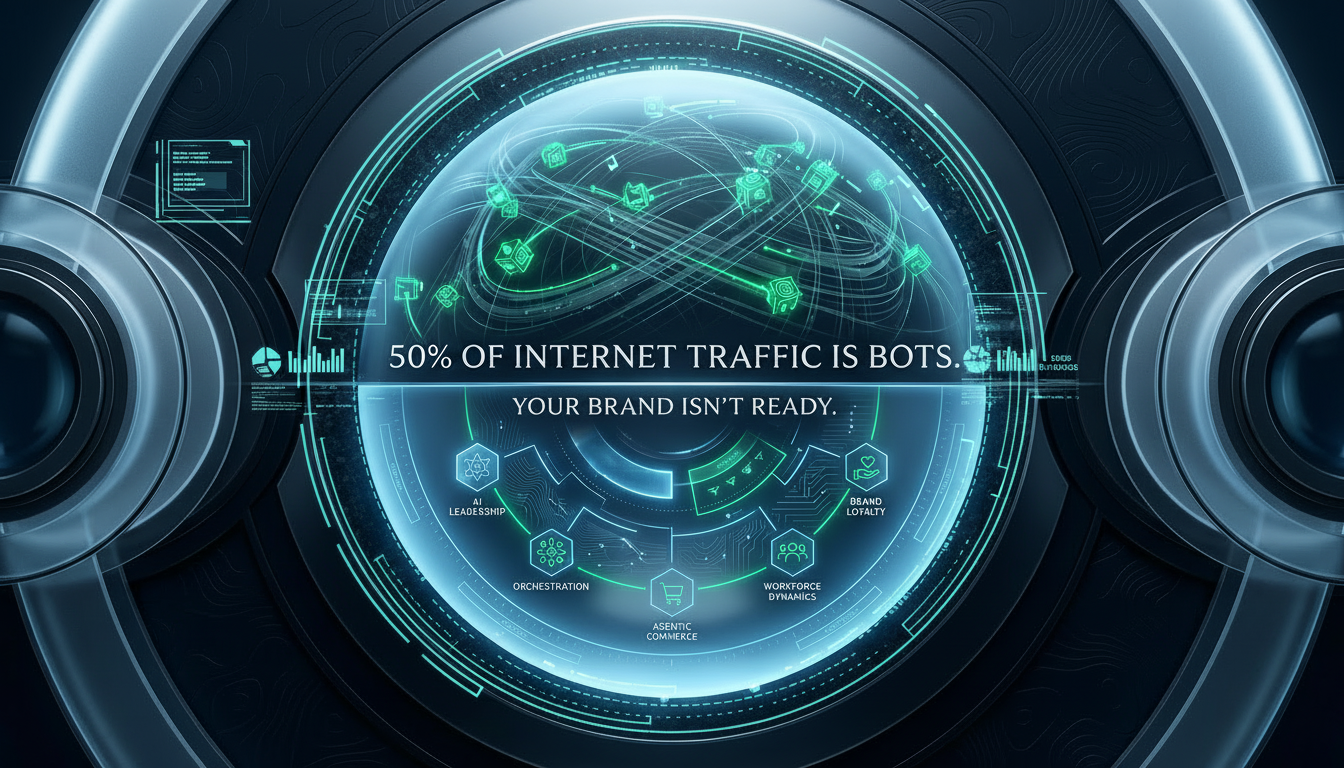
• AI impact on internet traffic and bot proliferation: Over half of all internet traffic is now bots, fundamentally altering online economics. (Matthew Prince on Masters of Scale)
• CEO stress and stepping down intentions: Nearly 50% of C-suite executives are considering stepping down due to stress, highlighting a silent crisis in top leadership. (David Ko on Masters of Scale)
• Financialization: The post-1970s economic shift, characterized by deregulation and wealth concentration, continues to influence current economic inequalities. (David Gibbs on Radical Candor: Communication at Work)
• Skill-based career reinvention in the AI age: The most valuable skill for humans will be storytelling, to interpret data and drive action. (Scott Galloway on The Prof G Pod with Scott Galloway)
🔭 ON WATCH
• 🆕 Jolts: Career jolts offer a critical moment for employees to rethink their relationship with work, impacting everything from job satisfaction to loyalty. (Anthony Klotz on Coaching for Leaders)
• 🆕 Fairness in Organizational Changes: Transparent communication and procedural justice explanations during difficult organizational changes are crucial for employee trust and behavior. (Anthony Klotz on Coaching for Leaders)
• 🆕 The Radical Fund (book): This book explores historical models of social change funding, offering insights into how limited resources can drive significant societal transformation. (John Witt on Radical Candor: Communication at Work)
• 🆕 Aneesh Raman: LinkedIn's Chief Economic Opportunity Officer is a key voice on the evolving workforce and the real-world impact of AI. (The Prof G Pod with Scott Galloway)
❄️ COOLING OFF
• Blindly trusting gut instincts: Gut feelings are physiological signals of discomfort or novelty, not necessarily accurate predictions or infallible guides for major decisions. (Trisha Pasricha on Worklife with Adam Grant)
• Colon cleanses and detox rituals are ineffective and unnecessary: The liver is the body's natural and highly efficient detoxification system, rendering these practices redundant. (Trisha Pasricha on Worklife with Adam Grant)
• Traditional leadership coaching failures: Focusing solely on the individual leader, rather than involving the team and understanding the broader context, often leads to unsatisfactory results. (Will Linssen on The Leadership Podcast)
• Misattribution of layoffs to AI instead of incompetence: Many layoffs touted as AI-driven are, in reality, 'AI washing' to mask over-hiring or managerial shortcomings, with little actual impact on productivity. (Scott Galloway on The Prof G Pod with Scott Galloway)
THE BOTTOM LINE
Navigating the AI-driven future requires leaders to shed traditional paradigms, cultivate collective intelligence, and prioritize transparency to build resilient, adaptable organizations.
YOUR MOVE
Audit: Assess current leadership development programs to ensure they are pivoting from individual knowledge acquisition to team orchestration skills relevant for an AI-augmented workforce.
Implement: Develop clear communication protocols for organizational changes, ensuring managers provide detailed, procedurally fair explanations to maintain employee trust and mitigate negative impacts.
Strategize: Evaluate core business functions for vulnerability to agentic commerce, identifying areas where brand loyalty might erode and where verifiable performance data will become paramount.
Challenge: Establish mechanisms to identify and confront narcissistic leadership tendencies within the organization, promoting mission-over-ego and fostering a truly collaborative culture.
📖 Want the full episode breakdowns, guest details, and listen links?
APPENDIX: INTEL SOURCE
CEO School with Suneera Madhani: "Why Your Network Is Literally Your Net Worth" · 49 min · Featuring Cate Luzio ▶ Listen
Coaching for Leaders: "777: How to Help Employees Handle Tough Moments, with Anthony Klotz" · 38 min · Featuring Anthony Klotz ▶ Listen
Dare to Lead with Brené Brown: "Mission vs. Ego: The Dangers of Narcissistic Leadership" · 63 min · Featuring Brené Brown ▶ Listen
Masters of Scale: "The internet is breaking. So what’s next? with Cloudflare’s Matthew Prince" · 35 min · Featuring Matthew Prince ▶ Listen
Masters of Scale: "The “most stressed” wellness CEO, with Calm’s David Ko" · 33 min · Featuring David Ko ▶ Listen
Radical Candor: Communication at Work: "How to Remake America S8 | E9" · 47 min · Featuring John Witt ▶ Listen
Radical Candor: Communication at Work: "Revolt of the Rich S8 | E8" · 50 min · Featuring Kim Scott ▶ Listen
The Leadership Podcast: "TLP505: Why Leadership Coaching So Often Fails" · 41 min · Featuring Will Linssen ▶ Listen
The Prof G Pod with Scott Galloway: "What to Do if AI Comes for Your Job — with Aneesh Raman" · 29 min · Featuring Aneesh Raman ▶ Listen
Worklife with Adam Grant: "ReThinking: Can you trust your gut? with GI doctor Trisha Pasricha" · 38 min · Featuring Trisha Pasricha ▶ Listen
Worklife with Adam Grant: "ReThinking: David Beckham on thriving under pressure and learning from mistakes" · 27 min · Featuring David Beckham ▶ Listen