
The strategic stakes of global interconnectedness are reshaping everything from corporate operating models to geopolitical alliances and even the very purpose of leadership.
📊 11 episodes across 7 podcasts
⏱ 509 minutes of intelligence analyzed
🎙 Featuring: Mark Crowley, Jan Rutherford, Jim Vaselopulos
THE BIG SHIFT
The New Rules of Global Interdependence Are Unraveling Traditional Strategic Playbooks
Traditional geopolitical and economic alignments are being fundamentally renegotiated at a pace few anticipated. The long-held assumption of linear global integration and a unipolar world order is being challenged by nations prioritizing economic stability and strategic advantage over historical allegiances. This shift requires multinational corporations to re-evaluate supply chains, market access, and even their long-term growth strategies, as political risk becomes an overwhelming factor.
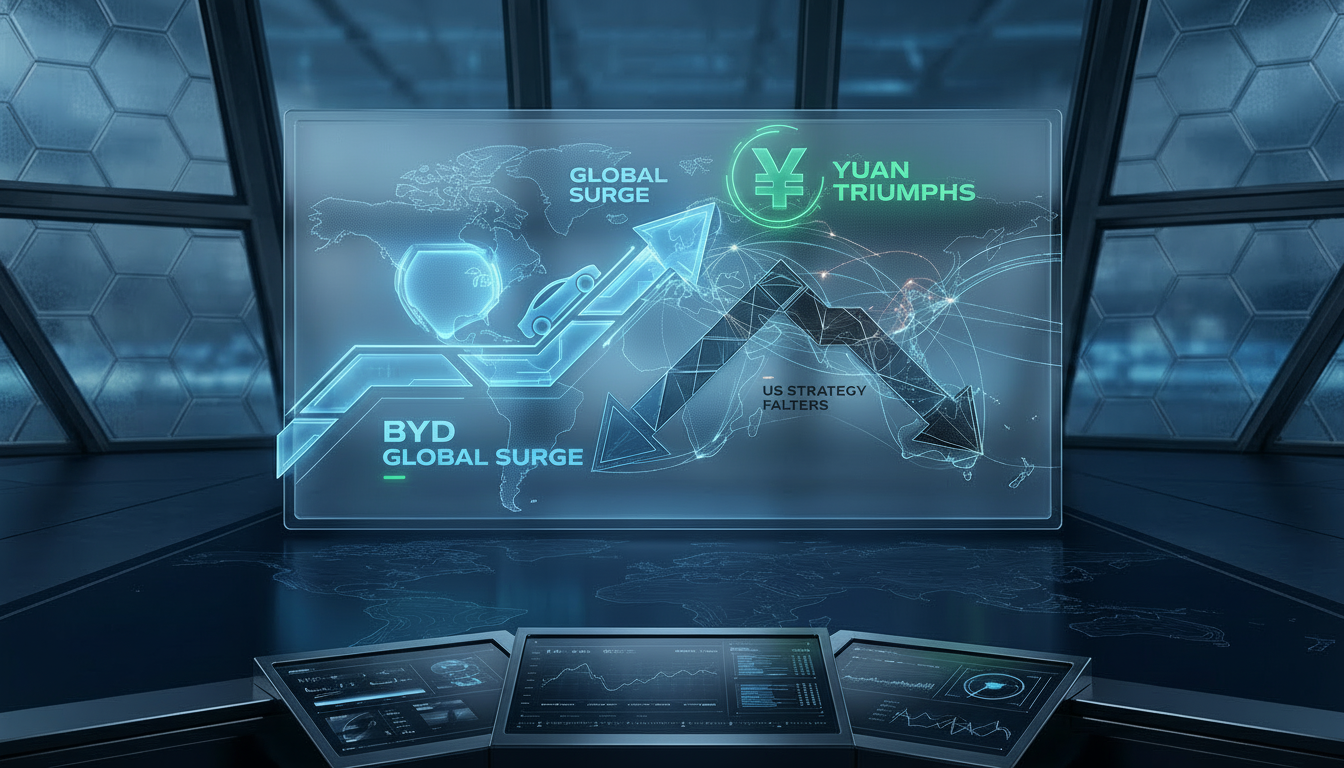
For instance, despite ongoing US-China tensions, Apple remains deeply entrenched in China for manufacturing and revenue, highlighting the deep commercial interdependencies that transcend political rhetoric. Alice Han and James Kynge on The Prof G Pod with Scott Galloway noted that what happens to Apple in China reflects broader pressure exerted on foreign companies by the Chinese government due to the market's critical revenue contributions. This pressure extends globally, with BYD's overseas sales now surpassing domestic sales, indicating a strategic push for global market share by Chinese firms (James Kynge on The Prof G Pod with Scott Galloway).
"When China says jump, Apple will jump, at least to some degree. That's because Apple has invested so much in the China market and because Apple gets such a large proportion of its global revenues from China."
— James Kynge, Host at Vox Media Podcast Network
This dynamic extends to geopolitical maneuvering, where China is observed employing a "game theory" approach to conflicts like the Iran crisis, prioritizing economic stability, oil supply, and strategic alliances over direct confrontation (James Kynge on The Prof G Pod with Scott Galloway). This implies a world where economic heft dictates diplomatic posture, and companies must navigate shifting alliances and potential disruptions daily. Flexport CEO Ryan Petersen on Masters of Scale articulated the cascading effects of global disruptions, from the Strait of Hormuz crisis to tariff changes, emphasizing that businesses must now operate under an assumption of continuous uncertainty. The era of predictable global markets and stable supply chains is over, demanding constant re-evaluation of every strategic vector.
The Boardroom Question: How are we actively stress-testing our growth strategies and supply chain resilience against scenarios where geopolitical volatility overrides traditional market logic?
IDEAS IN BRIEF
① Employee well-being is not "wellness" and leaders are failing at it. Traditional employee engagement models have failed, with engagement hitting a ten-year low. True well-being is driven by a sense of belonging and strong interpersonal connections fostered by leaders, not by wellness apps or transactional leadership. (Mark Crowley on The Leadership Podcast)
→ The Implication: Leaders must pivot from a "productivity-only" mindset to genuinely understanding and addressing employees' emotional drivers, integrating human connection as a core leadership principle to reverse disengagement.
② Authenticity requires empathy and boundaries. Leaders often misunderstand authenticity, leading to communication breakdowns and damaged relationships. True authenticity is not unfiltered expression but is practiced with empathy and clear boundaries, understanding who has earned the right to hear your story. (Brené Brown on Worklife with Adam Grant)
→ The Implication: Organizations should foster a culture that clarifies authenticity expectations, emphasizing mindful communication and psychological safety to prevent misinterpretation and encourage trust-building.
③ The "meaning crisis" is a silent epidemic impacting the workforce. A significant decline in meaning since 2008 has fueled rising depression and anxiety, even among successful individuals. This crisis stems from over-reliance on technology and a focus on "complicated" solutions, neglecting the "complex" questions of purpose. (Arthur Brooks on Masters of Scale)
→ The Implication: Leaders must recognize the strategic importance of fostering meaning for their teams, encouraging the pursuit of purpose beyond transactional metrics to boost resilience and overall well-being.
④ The "greatest snatching defeat from the jaws of victory" in geopolitics. Despite military actions, Iran is perceived as gaining geopolitical momentum and economic leverage, particularly through increased oil exports at a premium amidst sanctions, raising questions about the effectiveness of current US strategy. (Scott Galloway on The Prof G Pod with Scott Galloway)
→ The Implication: Business leaders with global operations should factor in potential shifts in geopolitical power balances and their economic consequences, as traditional military interventions may not yield intended strategic outcomes.
⑤ Your presentation impact is determined by your initial and final statements. Due to primacy and recency biases, the first and last sentences of a presentation are the most memorable, yet many presenters fail to optimize them, diluting their message's recall. Oliver Aust notes that "[n]othing matters more than the first and the last sentence of your presentation." (Oliver Aust on SPEAK LIKE A CEO)
→ The Implication: Strategic communicators should meticulously craft compelling openings and closings, treating them as critical bookends that frame the entire message and ensure key takeaways resonate.
SIGNAL BOARD
🔥 HEATING UP
• Belonging as a driver of well-being: The number one driver of employee well-being is belonging and social connection, fundamentally shifting the responsibility to leaders. (Mark Crowley on The Leadership Podcast)
• CNY usage in trade settlements rising: Chinese yuan usage in tokenized cross-border transactions saw a 2,500-fold increase since 2022, reaching $55 billion. (James Kynge on The Prof G Pod with Scott Galloway)
• BYD global sales overtaking Tesla: BYD's overseas sales surpassed its domestic sales, signaling a major turning point for Chinese automakers' global ambitions. (Alice Han on The Prof G Pod with Scott Galloway)
• $160 billion tariff refund opportunity: A potential $160 billion in tariff refunds following a Supreme Court decision has created an active secondary market. (Ryan Petersen on Masters of Scale)
👀 ON WATCH 🆕
• Premortem: The concept of a 'pre-mortem' is being applied not just in business but in personal relationships to anticipate and prevent failures. (Brené Brown on Dare to Lead with Brené Brown)
• repair and apology: Adam Grant's genuine apology after a public disagreement with Brené Brown led to a 4-year rift healing, underscoring its power. (Brené Brown on Worklife with Adam Grant)
• 3P framework (Plan, Practice, Present): A comprehensive guide for presenters to shift focus from perfection to genuine audience connection. (Oliver Aust on SPEAK LIKE A CEO)
• Body language impact on message credibility: Audiences believe body language more than words, highlighting the need for non-verbal congruence in communication. (Oliver Aust on SPEAK LIKE A CEO)
❄️ COOLING OFF
• Traditional employee engagement models: Despite decades of focus, employee engagement remains at a ten-year low, indicating fundamental flaws in prevailing models. (Mark Crowley on The Leadership Podcast)
• Uncritical expression of authenticity: Authenticity without empathy and boundaries fails to be authentic. (Brené Brown on Worklife with Adam Grant)
• One-sided view of global political stability: The Red Sea disruption, Strait of Hormuz crisis, and the Iran conflict demonstrate that global supply chain predictability is a diminishing expectation. (Ryan Petersen on Masters of Scale)
• US credibility as a global wrecking ball: China is actively framing the US as a global destabilizing force. (James Kynge on The Prof G Pod with Scott Galloway)
THE BOTTOM LINE
As global volatility accelerates, leaders must prioritize human connection, strategic foresight, and authentic communication to navigate an increasingly interconnected and unpredictable world.
Your Move
Here are three actions to consider this week:
• Audit your current definition of "employee well-being": Assess if your strategies genuinely foster belonging and emotional connection, rather than just offering transactional perks, to address the core drivers of disengagement. (Mark Crowley on The Leadership Podcast)
• Conduct a geopolitical risk assessment for your critical supply chains: Identify single points of failure related to global chokepoints or shifting geopolitical alliances, and model the impact of sustained disruption on your operating costs and market access. (Ryan Petersen on Masters of Scale)
• Implement a "pre-mortem" exercise for your next major strategic initiative: Gather your leadership team to envision all possible ways the initiative could fail, and then work backward to identify preventative measures and build resilience into the plan. (Adam Grant on Dare to Lead with Brené Brown)
📖 Want the full episode breakdowns, guest details, and listen links?
APPENDIX
The Prof G Pod with Scott Galloway: "China Decode: Apple Doubles Down in China as Trump Blinks" · 45 min · Featuring Alice Han
Strategic Context: For executives navigating US-China relations, this episode illuminates how major tech companies like Apple are managing complex operating environments under intense government pressure.
The Leadership Podcast: "TLP504: Why Your Team Is Still Disengaged" · 44 min · Featuring Mark Crowley
Leadership Insight: CEOs and HR leaders seeking to genuinely improve employee retention and performance will find actionable insights on shifting from engagement talk to real well-being drivers.
Worklife with Adam Grant: "ReThinking: David Beckham on thriving under pressure and learning from mistakes" · 27 min · Featuring David Beckham
Resilience Framework: For leaders interested in character-building and public perception management, Beckham's story on overcoming adversity provides a compelling case study.
Masters of Scale: "Crisis at Hormuz, and your $160b tariff refund clock, with Flexport’s Ryan Petersen" · 30 min · Featuring Ryan Petersen
Economic Outlook: Supply chain, finance, and legal executives should listen for foresight on geopolitical impact, tariff refund opportunities, and AI's role in logistics risk mitigation.
Masters of Scale: "Arthur Brooks on how to build a meaningful life" · 40 min · Featuring Arthur Brooks
Executive Well-being: Business leaders grappling with the long-term impact of work on personal fulfillment will find a thoughtful framework for integrating meaning into professional life.
CEO School with Suneera Madhani: "Why Your Network Is Literally Your Net Worth" · 49 min · Featuring Cate Luzio
Growth Strategy: Entrepreneurs and growth-focused leaders will gain insights into leveraging genuine community building and strategic partnerships for business resilience and expansion.
The Prof G Pod with Scott Galloway: "China Decode: China Walks a Dangerous Line as Iran War Escalates" · 48 min · Featuring Alice Han
Global Market Analysis: For executives in automotive, tech, and trade, this episode offers critical analysis of China's economic and strategic moves shaping global markets and supply chains.
SPEAK LIKE A CEO: "317: Become a Presentation Genius (Full Course)" · 46 min · Featuring Oliver Aust
Communication Skills: Any leader looking to enhance their persuasive ability and executive presence will benefit from concrete strategies to improve presentation impact.
The Prof G Pod with Scott Galloway: "Raging Moderates: Did Trump Already LOSE the War in Iran? (ft. Ian Bremmer and Dan Senor)" · 50 min · Featuring Scott Galloway
Geopolitical Strategy: For strategists and investors, this episode offers a nuanced debate on the effectiveness and implications of US-Iran policy and its regional ripple effects.
Worklife with Adam Grant: "Brené and Adam on What They Will Never Agree On | from The Curiosity Shop with Brené Brown and Adam Grant" · 59 min · Featuring Brené Brown
Team Dynamics: Leaders focused on building high-trust teams will appreciate the candid discussion on repair, apology, and navigating fundamental disagreements while preserving collaboration.
Dare to Lead with Brené Brown: "How This Podcast Could Fail" · 71 min · Featuring Brené Brown
Risk Management: Executives and project leaders will learn how to apply the "pre-mortem" approach to anticipate and prevent failure in complex collaborative ventures.