The build-vs-buy debate for AI is over; the new challenge for operators is securing the AI agents working on your behalf.
The Intake
This week's deployment signals, distilled for operators. What you need to know before your next leadership meeting.
This week's scan:
• Intelligence from: 11 episodes across 10 podcasts
• Total listening time analyzed: 252 minutes of operator conversation
• Expert voices included: 28 guests like Dan Loney and Serguei Netessine
The Lead
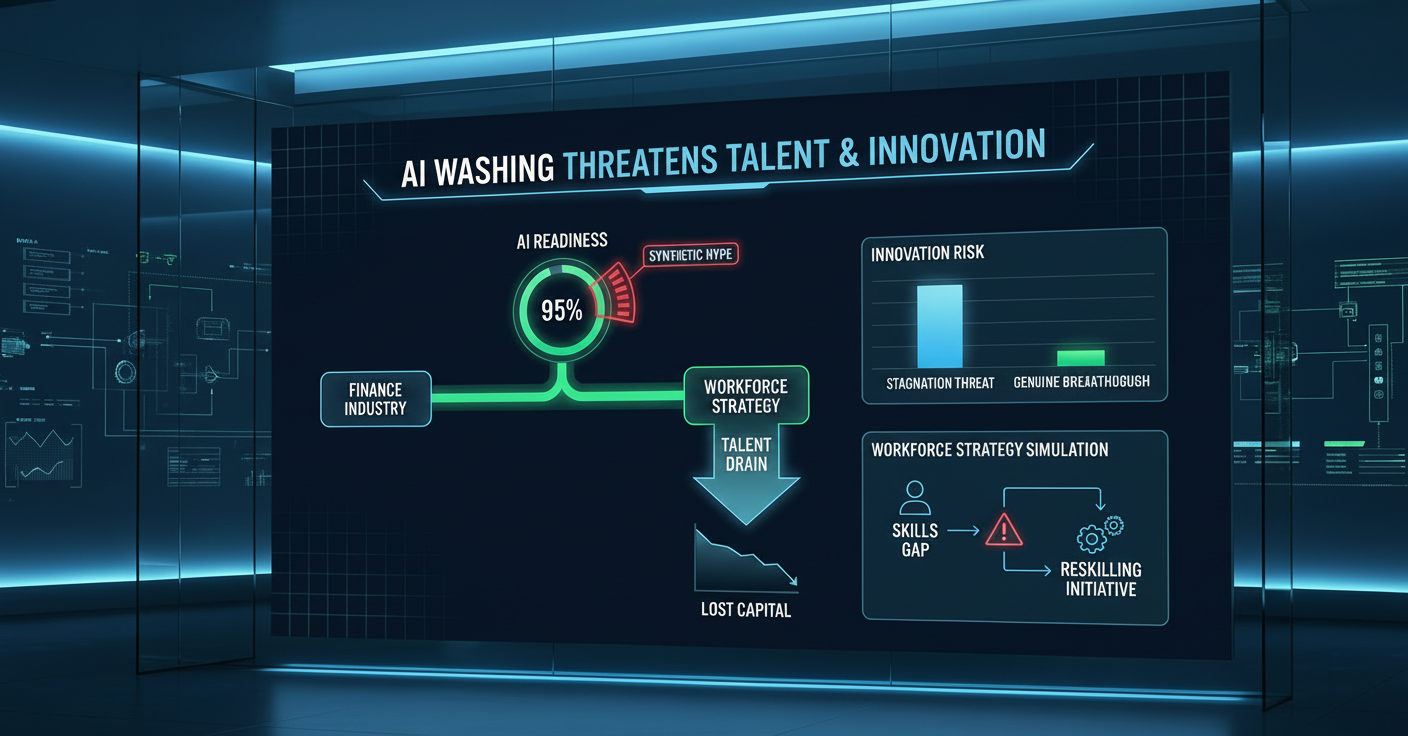
The Quiet Cost of AI 'Washing' Could Be Your Best Talent
Despite headlines about a booming economy, a quieter trend is reshaping the white-collar job market. Companies, particularly in finance, are slowing hiring and even reducing headcount under the guise of AI integration, a practice coined "AI washing." This isn't about genuine AI-driven efficiency; it's a strategic move to appease investors demanding cost-cutting. Operators need to be acutely aware that these cuts, while politically expedient, can lead to a talent drain and a de-skilled workforce that will hamstring future innovation, particularly in areas where AI's impact is not immediately evident or where the technology is still nascent.
"I didn't make up this phrase, but it is attributed to me now. And it's AI washing. And that means that they're claiming it's AI even when it's not AI. And the reason is they're under enormous pressure from investors in particular to show that they're using AI because the hope is AI will allow you to cut jobs." — Peter Cappelli, Professor of Management and Director of the Center for Human Resources at The Wharton School
The strategic question for your next leadership meeting: Are our AI initiatives genuinely driving efficiency and growth, or are they a smokescreen for short-sighted headcount reductions that compromise long-term capabilities?
The Rundown
① IT Operations are Losing Relevance Without an AI Strategy. IT operations face an existential threat: becoming an AI adoption bottleneck, leading to businesses bypassing them via shadow IT or outsourcing. (Gartner ThinkCast)
• The Operator Take: Proactively build a "continuous operations" pipeline for AI agents now. If you're not planning for it, your business units are already doing it, and you're losing control and relevance.
② Geopolitics is a Hidden Supply Chain Risk to Main Street. US sanctions targeting Lukoil's Russian ownership are inadvertently crippling American family-owned gas stations, causing banking disruptions and customer boycotts. (This Week in Business)
• The Operator Take: Beyond direct sanctions, brand association and reputational risk are now critical elements of supply chain and operational planning. Review your vendor and partner ecosystem for indirect geopolitical exposure.
"The molecules in the tank may be American, but the reputational risk is about, about the logo, not the refinery. And this is what a lot of customers see." — Serguei Netessine, Professor of Operations, Information and Decisions at The Wharton School
③ The Nudge Theory Evolves: Climate Clubs and Carbon Taxes. Richard Thaler, Nobel laureate and co-author of "Nudge," suggests that behavioral economics can be deployed to solve large-scale problems like climate change, specifically highlighting how "climate clubs" and carbon taxes can be more effective when leveraging human psychology. (Freakonomics Radio)
• The Operator Take: The principles of choice architecture and behavioral economics can be applied to internal processes, not just customer experiences. Use nudges to drive adoption of internal tools or compliance with new policies, making desired behaviors the default.
④ Identic AI Demands Identity Sovereignty. The next wave of AI, "identic AI," will involve personalized AI companions acting on users' behalf. The crucial insight is the need for individuals to own and control their identic AIs to prevent external manipulation and ensure self-sovereignty. (HBR IdeaCast)
• The Operator Take: As your team integrates more agentic AI, immediate focus must shift to identity security and ownership. Losing control of an agent that reflects an employee's "digital self" creates unprecedented risks for data security and corporate integrity. Secure critical AI agent identities from day one.
"I want to control Digital Dawn. I want to control the extension of me. I want to own it, and I don't want some platform using it for their purposes rather than mine. So we each need to become aware of what's at stake here. And the question of sovereignty becomes the central issue of our time." — Don Tapscott, CEO and Author of From Control to Collaboration
The Stack
This week's buy, build, and benchmark signals for your technology roadmap.
🟢 DEPLOYING
• AI-powered chatbots for citizen inquiries: Municipalities are using these for automated responses to FAQs and virtual assistant functions. (Clarity)
• AI for corporate sustainability reporting: Over 60% of sustainability leaders are using AI for environmental goals. (C-Suite Perspectives)
🟡 EVALUATING
• 🆕 Continuous Operations framework for AI Agents: Essential for safe and efficient management of AI agents, preventing I&O from becoming a bottleneck. (Gartner ThinkCast)
• 🆕 Identic AI identity management: Crucial for controlling personalized AI companions that learn user values and act on their behalf. (HBR IdeaCast)
• Smart sensors for infrastructure monitoring: Municipalities are deploying these for predictive maintenance and system failure detection. (Clarity)
🔴 RECONSIDERING
• Costly custom LLM solutions: 40% of agentic AI projects are predicted to be canceled due to unfulfilled promises and cost overruns. (Gartner ThinkCast)
• "AI washing" initiatives: Risk of eroding trust and de-skilling workforce if AI claims don't align with genuine implementation. (This Week in Business)
The Debate
Are AI Agents a Strategic Advantage or an IT Burden?
🐂 The Bull Case: AI agents are the natural evolution of AI, offering personalized companionship and acting on users' behalf to shift management focus from execution to strategy. They promise efficiency, automation, and enhanced capabilities, redefining organizational architecture. Leading indicators suggest increased hyperscaler CapEx for AI buildout signals conviction in their long-term potential.
"The breakthrough is AI opportunity is still slightly ahead of us or slightly ahead of most of us, and that is the widespread introduction of AI companions that we'll have at our disposal at work and home that are trained by us, that know everything we know and that can take action on our behalf across a range of activities." — Allison Beard, Host at Harvard Business Review
🐻 The Bear Case: The hype surrounding AI agents is significantly outstripping reality. Only 15% are expected to be fully autonomous in seven years, and 40% of projects are predicted to be canceled due to cost, complexity, and unfulfilled promises. IT operations are unprepared, risking "AI agent sprawl" and becoming a bottleneck, leading to loss of relevance. The real danger is "AI washing," where companies claim AI integration for headcount reduction without genuine implementation.
"Right now, AI agents are at the very peak of hype. But I mean, there's always new, hyped up technologies. And as always, we still have to keep the lights on and do our day jobs. None of that goes away just because we're focused on the shiny new thing." — Paul Delory, VP Analyst at Gartner
The Operator's Read: For most operators, the bear case is the immediate reality. Prioritize foundational identity and governance for any AI agent deployment. Expect to lose money on first-generation agentic projects if you don't aggressively manage scope and define success criteria. Your focus should be on building the infrastructure and developing a "continuous operations" mindset for agents, not expecting fully autonomous saviors.
The Bottom Line
The real signal this week isn't about AI's capabilities, but about the operational frameworks and controls desperately needed to manage its reality.
🎯 Your Move
- Task your Head of IT Operations to... immediately begin planning for "continuous operations" for AI agents, even if you don't have agents deployed yet. This proactive step prevents major bottlenecks as adoption scales.
- Mandate a review of all current "AI initiatives" to... differentiate between genuine AI deployments and "AI washing." Prioritize measurable ROI and demonstrable efficiency gains over investor-pleasing narratives.
- Schedule a working session with your Head of Security and Head of Data... to discuss ownership and identity management for future "identic AI" or personalized agents. Map out immediate risks and secure enterprise data flows.
What We Listened To
This Week in Business: "Why Hiring Has Slowed Without Mass Layoffs"
• Runtime: 12 min
• Guests: Peter Cappelli (Professor of Management and Director of the Center for Human Resources, The Wharton School), Dan Loney (Host, The Wharton School)
• For Operators: This episode exposes the "AI washing" trend where companies claim AI integration to reduce headcount, even without genuine deployment. Crucial for understanding market pressures on white-collar employment and the potential for short-sighted talent cuts.
"The cuts in white collar jobs are easier to make because you don't see the consequences immediately. If you cut a production worker and a frontline worker, you know, you don't have people to staff the restaurant... You cut a white collar job, people, at least for a little while, try to, to cover the work, right?" — Peter Cappelli, Professor of Management and Director of the Center for Human Resources at The Wharton School
This Week in Business: "How Geopolitics Is Hitting Local Gas Stations"
• Runtime: 13 min
• Guests: Dan Loney (Host, The Wharton School), Serguei Netessine (Professor of Operations, Information and Decisions, The Wharton School)
• For Operators: This is a masterclass in unexpected geopolitical risk impacting local businesses. It highlights how brand reputation, even with "US-refined" products, can trigger banking disruptions and customer boycotts due requiring operators to re-evaluate vendor relationships for indirect exposure.
"Today you have local operators running community businesses under a brand whose ownership is a geopolitical flashpoint." — Serguei Netessine, Professor of Operations, Information and Decisions at The Wharton School
The Better Boards Podcast Series: "The Spirit of the Code: Making Comply or Explain Work in Practice | Kelvin Ernest, Senior Policy Associate, Financial Reporting Council"
• Runtime: 15 min
• Guests: Dr Sabine Dembkowski (Host, The Better Boards Podcast Series), Kelvin Ernest (Senior Policy Associate, Financial Reporting Council)
• For Operators: Essential listening for governance leaders. It clarifies that "Comply or Explain" is about thoughtful decision-making and accountability, not rote adherence. Apply this mindset to internal policy: focus on strategic intent over rigid rules.
"The biggest takeaway for boards is that it encourages them to think carefully about how each provision fits into their own individual contexts." — Kelvin Ernest, Senior Policy Associate at Financial Reporting Council
Freakonomics Radio: "All You Need Is Nudge (Update)"
• Runtime: 57 min
• Guests: Richard Thaler (Professor of Economics, University of Chicago), Freakonomics Radio + Stitcher (Host, Freakonomics Radio + Stitcher)
• For Operators: This deep dive into "nudge theory" offers direct applications for influencing behavior, from employee engagement to systemic policy changes. Understanding "choice architecture" can significantly improve adoption of internal tools or compliance with new procedures.
"A nudge, as we will use the term, is any aspect of the choice architecture that alters people’s behavior in a predictable way without forbidding any options or significantly changing their economic incentives." — Richard Thaler, Professor of Economics at the University of Chicago
Gartner ThinkCast: "IT Operations Are Not Ready for AI Agents: How to Respond Today"
• Runtime: 23 min
• Guests: Autumn Stanish (Director Analyst, Gartner), Paul Delory (VP Analyst, Gartner), Karen Stokes Lockhart (Host, Gartner)
• For Operators: This is a wake-up call for IT leaders. It highlights the critical need to build "continuous operations" for AI agents now to avoid becoming a bottleneck and losing relevance. A must-listen for anyone responsible for IT infrastructure.
"If we don't change, I and O becomes the bottleneck. And if that happens, the business will find another way, whether that's through shadow IT or outsourcing or decentralization. And so in those cases, we don't just lose control, we lose relevance." — Autumn Stanish, Director Analyst at Gartner
Exchanges: "The New AI Trades"
• Runtime: 16 min
• Guests: Ryan Hammond (Portfolio Strategist, Goldman Sachs Research)
• For Operators: Insights into how AI is causing significant sector rotation and stock valuation re-ratings, especially in software. Crucial for leaders making build-vs-buy decisions and evaluating the long-term impact of AI on competitive landscapes and market cap.
"AI disruption risk is really the common thread throughout a lot of these industries selling off in recent weeks." — Ryan Hammond, Portfolio Strategist at Goldman Sachs Research
Clarity: "How can governments protect citizen data in the age of AI?"
• Runtime: 27 min
• Guests: Zach Warren (Legal Insights and Strategy Lead, Thomson Reuters Institute), Teneé Frazier (Senior Specialist Legal Editor, Government Practice, Thomson Reuters Practical Law)
• For Operators: This episode demonstrates that organizations, even in the absence of federal guidance, are independently developing AI governance frameworks. Your internal AI policies need to proactively address privacy, security, and ethical use of data, or you'll be playing catch-up to a fragmented standard.
"The first line of defense is always going to be your users and your employees. Training and education is key." — Teneé Frazier, Senior Specialist Legal Editor, Government Practice at Thomson Reuters Practical Law
BoardVision: "What Boards Really Want from the CEO"
• Runtime: 23 min
• Guests: Mallory Bucher (Director of Governance Content, NACD), Wayne Peacock (Vice Chair, former CEO of USAA, Elizabeth Dole Foundation), Dona Young (Director, USAA, NACD, Spahn & Rose)
• For Operators: A rare look behind the curtain at what boards truly value. It highlights that transparency, clear action plans during crises, and humility build trust — directly applicable for any operator needing to influence senior leadership.
"Having the courage as the CEO to bring forward the news, whatever the news might be, goes a long way to establishing a level of trust that the board knows they can count on you to tell it to them straight, no matter what's happening." — Wayne Peacock, Vice Chair, Elizabeth Dole Foundation; former CEO of USAA
C-Suite Perspectives: "How AI Is Reshaping Corporate Sustainability"
• Runtime: 27 min
• Guests: Steve Odland (Host, The Conference Board), Andrew Jones (Principal Researcher, The Conference Board's Governance and Sustainability Center), Dr. Andrew Jones (Scholar (assumed) and author of the report, The Conference Board)
• For Operators: This episode uncovers AI's significant environmental footprint beyond just compute, including water use and e-waste. It's a must-listen for anyone building or deploying AI, forcing a strategic consideration of environmental impact alongside traditional operational metrics.
"More than 60% of corporate sustainability leaders are already using AI for something environmental related." — Andrew Jones, Principal Researcher at The Conference Board's Governance and Sustainability Center
The Indicator from Planet Money: "Can I get my tariff money back now?"
• Runtime: 9 min
• Guests: Darian Woods (Host, NPR), Adrian Ma (Host, NPR), Ted Murphy (Lawyer specializing in global trade, Sidley Austin), Daniel Harberger (Founder, Woof)
• For Operators: This short but sharp episode flags the ongoing volatility of trade policy. Even with a Supreme Court ruling, the underlying risk of tariffs persists. Companies heavily reliant on international trade should maintain contingency plans.
"You've got to sort of transition pretty quickly into, okay, now what does this mean sort of in the real world?" — Ted Murphy, Lawyer specializing in global trade at Sidley Austin
HBR IdeaCast: "With Rise of Agents, We Are Entering the World of Identic AI"
• Runtime: 30 min
• Guests: Don Tapscott (CEO and Author of From Control to Collaboration, The Tapscott Group), Adi Ignatius (Host, Harvard Business Review), Allison Beard (Host, Harvard Business Review), Harvard Business Review (Host, Harvard Business Review)
• For Operators: This episode introduces "identic AI" — personalized AI companions that learn your values. The critical takeaway is that managing and securing the "identity" of these agents will become paramount to prevent manipulation and ensure organizational control as they act on behalf of individuals or teams.
"The shift is that AI is no longer just an extraordinary technology. It's becoming part of the human experience. And we call these personal agents a subset of agentic AI. We call them identic AI." — Don Tapscott, CEO and Author of From Control to Collaboration